Hook Type Commutator for Appliances and Electric Tools
When looking for important motor parts for industrial equipment, the hook type commutator stands out as a well-designed option that has a direct effect on how well the equipment works and how long the motor lasts. This spinning electrical switch design has hook-shaped terminals that hold the armature windings in place both physically and electrically. This allows for smooth current reversal in brushed DC motors, which are popular in power tools, home appliances, and cars. Unlike standard riser-type setups, hook terminals allow automatic high-speed wrapping processes. This lowers the cost of production while keeping better mechanical stability in tough working conditions.
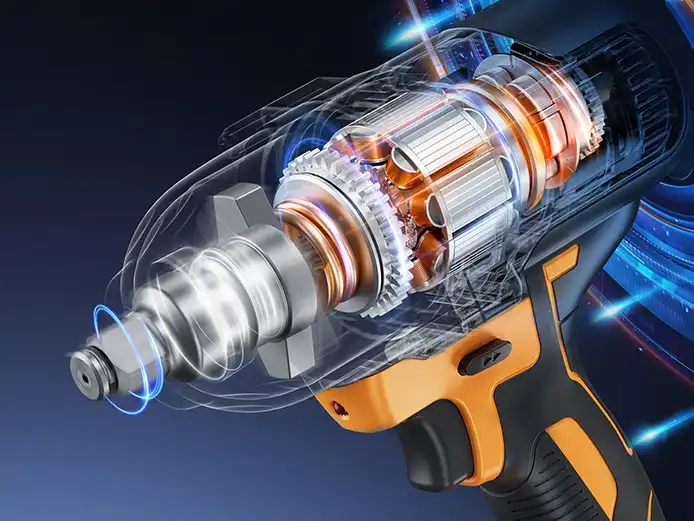
Understanding the Commutator: Core Functions and Types
Your production line's electric motors depend on good current management to work. Brushed motors use commutators, which change alternating current into direct current by making brush contact with spinning parts at the same time. This basic step makes sure that all appliances, from vacuum cleaners to industrial power drills, have the same motor torque and direction control.
The Mechanical Foundation of Motor Operation
The commutator assembly is the most important part of a brushed motor. A hook type commutator is made up of several copper segments that are insulated from each other and mounted on a rotating shaft. As the motor turns, carbon brushes keep making contact with these segments. At just the right time, this changes the direction of the current in the armature windings. By synchronising these parts, a constant spinning force is created, which easily turns electrical energy into mechanical power.
Segmented vs. Fixed Commutator Designs
Segmented commutators have copper bars that are mounted one on top of the other and are held together by insulating materials like phenolic resin. Because it is built in modules, makers can change the segment count, which is usually between 12 and 48 bars, to meet the needs of each motor. Our 24-segment configuration, with a 30.3mm outer diameter, a 12mm inner diameter, and a height of 22.8mm, is the best balance for medium-sized appliance motors that need to run smoothly at different speeds.
Fixed commutators, on the other hand, are made of a single piece and are better for smaller motors that don't need a lot of power. Although segmented designs may be cheaper to make, they work better in high-current situations where heat dissipation and electrical efficiency are very important.
Material Selection Impact on Performance
Selecting the Right Commutator for Your Appliances and Electric Tools
Evaluating Technical Specifications for Your Application
Baseline commutator needs are set by the motor's voltage and current values. For higher voltage uses, better insulation is needed, and for high-current motors, bigger segment cross-sections that lower resistive heating are helpful.
Rotation speed is also very important. Motors that spin faster than 20,000 RPM need commutators that are designed to fight centrifugal force and keep segments from moving while they're running.
Things in the environment, like humidity, dust, and weather changes, affect the choice of material and surface treatment. Industrial tools used in construction sites need to be strong and resistant to contamination. On the other hand, home appliances should be able to run quietly by being precisely balanced and having smooth surfaces.
Hook Type Advantages in Automated Production
The hook type commutator features a hook terminal design that changes the way winding works in large-scale production. Automated wrapping machines safely attach magnet wire to hooks, so there is no need to join each unit by hand. This ensures that electrical connections remain consistent across thousands of units. This manufacturing benefit directly leads to stable quality, which is especially important for Tier 1 automotive suppliers and industrial tool manufacturers that must comply with strict quality control standards.
Another important benefit is the mechanical stability under vibration. Hook connectors keep the electrical integrity of the motor throughout its service life because they are better at stopping wire sliding than slot-type connections. For companies that make power tools, this means that fewer warranty claims will be made, and their brand's reputation will improve in competitive markets.
Procurement Considerations for Industrial Buyers
Quality certifications should be the first thing you look for when reviewing sources. Compliance with ISO 9000 and IATF 16949 means that quality management systems have been set up and are in line with international automotive standards. These certifications make sure that the right testing procedures are used during the manufacturing process. For example, dielectric strength tests up to 3000V and inter-bar resistance measurements make sure that the current flows evenly.
Customisation options are just as important for OEM partnerships. Being able to change the number of segments, the tolerances for sizes, and the materials used makes it possible to handle different motor designs without having to go through long redesign processes. Manufacturers that offer technical help can work together to make prototypes, which speeds up the time it takes to get new products on the market.
When there are problems in the supply chain, production capacity and lead time dependability protect against them. A supplier that can send 50,000 pieces of hook type commutator in 30 days shows that they can both manufacture at scale and manage their inventory effectively. When coordinating just-in-time delivery schedules with assembly operations, this level of production consistency is highly valuable.
Maintaining and Troubleshooting Commutators in Electric Appliances and Tools
Preventive maintenance greatly increases the life of commutators and lowers the number of unexpected machine breakdowns. Knowing how things usually break down helps maintenance teams set up good inspection schedules that fit the needs of the business.
Recognizing Early Warning Signs of Wear
Roughness on the surface builds up slowly through brush contact friction. At first, it looks like light scoring is going in the same direction as the spin. If you don't fix these grooves, they get deeper, which raises the electrical resistance and sparking intensity. Regular review with a magnifying glass shows how wear is progressing before it becomes noticeable that the system isn't working as well as it should.
Electrical arcing between pieces of a hook type commutator means that the insulation is breaking down or that contaminants are building up. This effect speeds up wear on both the commutator surfaces and the carbon brushes, which leads to a cascading failure mode that makes the motor work less efficiently.
Discolouration around segment gaps that looks like dark brown or black deposits is a sign of overheating caused by too much current density or not enough cooling.
Implementing Effective Cleaning Protocols
As part of routine industrial maintenance, fine abrasive stones made just for this job should be used to clean the surface of commutators. This process gets rid of rust and carbon layers and makes the surface smooth again, which is important for brush contact.
How often something needs to be cleaned depends on how it's used and how dusty the environment is. For example, dirty environments may need cleaning once a month, while clean indoor uses may only need cleaning every three months.
Repair vs. Replacement Decision Framework
A cost analysis should compare the costs of repairs to the costs of replacements and take into account the effects of downtime. Minor surface wear can be easily fixed by cutting processes that return the shape and finish of the cylinder.
But commutators that show section lifting, deep cutting deeper than 0.5 mm, or insulation charring usually need to be replaced completely to make sure they work well for a long time.
Getting replacement parts from approved sources keeps you from having to deal with early breakdowns caused by poor materials or manufacturing flaws. Choosing a reliable hook type commutator from reputable manufacturers ensures better performance and durability, while manufacturers with good reputations often offer 1-year warranties that protect your investment and show their confidence in product quality, which is very important when managing the maintenance budgets for large fleets of equipment.
Advanced Insights on Commutator Design and Performance Optimization
The difference between good commutators and great ones is engineering excellence. Improvements to the design that focus on electrical efficiency, mechanical longevity, and thermal control lead to measured performance gains in completed motor assemblies.
Electrical Conductivity and Contact Resistance
When compared to pure copper, silver-copper alloys have lower contact resistance. This means that there is less voltage drop when current flows between brushes and segments. This increase in efficiency is especially important for battery-powered devices, where every watt of power loss affects how well they run. The hardness range of HB 80–110 is just the right amount of tough—it's soft enough for good brush conformity while still being strong enough to withstand repeated contact stress.
Specifications for the surface finish that aim for Ra values below 0.8μm lower both friction losses and brush wear rates at the same time. Precision machining and polishing techniques that get rid of tool marks without adding surface contaminants are needed to get this level of surface quality. The money spent on high-tech manufacturing tools pays off with longer repair times and more efficient motors.
Thermal Management Through Material Selection
Higher-temperature phenolic resins keep their shape even when they are used at temperatures close to 200°C. This thermal resilience stops segment loosening, which is a common way for motors to fail when they are started and stopped a lot or when they are running at high loads for a long time.
The maximum safe operating temperature of insulating materials is directly related to their glass transition temperature (Tg), which is a critical consideration when selecting materials for components such as a hook type commutator. This is why material certification documentation is so important during supplier qualification.
How heat is lost also relies on the shape and length of the segments. Wider holes between pieces let more cool air flow through while still providing enough insulation resistance. Our 24-segment design makes this balance work best for mid-power uses, getting rid of heat quickly without hurting the electrical performance or the structure.
Future Trends in Commutator Technology
New discoveries in material science keep improving the performance of commutators. New surface treatments that use graphene or diamond-like carbon films show amazing resistance to wear while lowering friction levels. These treatments make the brushes last a lot longer, which lowers the frequency of maintenance and the cost of running the motor over its lifetime.
Hybrid designs that include hook type commutator technology with intelligent commuting assistance are another emerging trend. These systems use Hall-effect sensors to detect the optimal timing for current switching, reducing electrical losses while maintaining the low cost and ease of use of traditional brushed motor designs. Manufacturers that need to balance performance requirements with budget limitations can benefit greatly from these hybrid solutions.
Guide to Buying Commutators: Trusted Suppliers and Quality Verification
Supplier choice affects the quality of the product, the dependability of delivery, and the success of the partnership in the long term. Doing your research before evaluating a vendor is important for avoiding quality problems and building relationships that are good for both sides.
Certification Verification and Quality Standards
International quality standards are a reliable way to show that a company can make something. ISO 9000 approval proves that quality management systems have been set up and that there are written methods for controlling the process, inspecting it, and taking corrective action. IATF 16949 adds requirements that are specific to the automotive industry. These requirements are especially important for suppliers that work with Tier 1 and Tier 2 auto component manufacturers.
In addition to certifications, looking at real test results and inspection data shows that the quality is the same from one production batch to the next. Asking for proof of dielectric strength testing, measuring accuracy, and material makeup analysis shows that the provider is honest and confirms that they are meeting the requirements. Manufacturers with a good reputation keep detailed records of all the tests they do and are happy to share these records with potential customers.
Evaluating Technical Support and Engineering Capabilities
Patent portfolios show that a company is committed to innovation and has a lot of technical knowledge. Suppliers with more than one idea patent or utility model patent show that they have busy engineering tools that can help with custom design projects. This technical knowledge is very helpful when making custom motor applications that need commutator specifications or performance characteristics that aren't standard.
Engineering support should go beyond just giving advice on the initial design. It should also include making prototypes, helping with testing, and suggesting ways to improve production. When manufacturers offer free samples, customers can test them out before placing big orders. This lowers the risk of buying while also making sure that the products work with existing motor designs.
Negotiating Terms for Long-Term Partnerships
Depending on how you want it customised, the minimum order quantity is usually between 5,000 and 10,000 pieces. For custom mould development, making tooling fee structures and volume-based refund policies clearer helps avoid confusion and sets clear expectations. When a supplier and a buyer agree that the seller will pay for the tooling once the total number of pieces bought reaches a certain level, like 500,000 over three years, the interests of both parties are aligned toward working together for a long time.
Logistics that are flexible can handle different delivery times and costs. Suppliers that offer more than one shipping method, such as sea freight for low-cost large shipments, air freight for orders that need to be delivered quickly, and express courier services for urgent prototype delivery, show that their operations are flexible enough to meet the needs of their customers as they change. Clear communication about lead times and production schedules makes sure that planning for procurement and planning for manufacturing are in sync.
Conclusion
To choose the right hook type commutator, you need to know about the technical requirements, quality standards, and supplier capabilities that affect how well the motor works and how reliably it operates. The 24-segment design with its precise measurements and silver copper construction is a tried-and-true technology that can be used in many areas, such as making appliances, power tools, and car systems. When you work with well-known companies that have ISO 9000 and IATF 16949 certifications, full engineering support, and customisable options, you give your business a long-term competitive edge through better part quality and reliable supply chain management.
FAQ
How often should commutators in industrial power tools undergo maintenance inspection?
How often you inspect depends on how busy your operations are and what the environment is like. Heavy-duty industrial uses usually benefit from eye checks every three months to look for surface wear, section displacement, and contamination buildup. For light-duty uses, this repair period may be pushed back to every six months. Checking the wear on the brushes can give you an idea of the state of the commutator indirectly, since faster brush wear often means that surface problems are starting to show up and need to be fixed.
What distinguishes brushless motors from traditional commutator-based designs?
With brushless motors, there is no mechanical commutation at all. Instead, rotor position sensors tell electronic controllers how to switch the current. This design lowers the need for maintenance and boosts efficiency, but it also raises the costs of the initial parts and makes the control system more complicated. Commutator motors are still a good choice for uses that don't need the highest level of efficiency. They are easy to use, reliable, and come in a range of prices that make them suitable for both home products and many industry tools.
Can manufacturers accommodate custom segment counts and dimensional specifications for specialized applications?
Most well-known manufacturers offer OEM and ODM services that allow for custom designs that meet the needs of each motor. For custom jobs, the minimum order quantity needs to be between 5,000 and 10,000 pieces in order to be worth the cost of the tools. Engineering teams work together to create specifications, test prototypes, and find the best ways to make things so that finished products meet performance goals and stay cost-effective for mass production.
Partner with ANGU for Reliable Hook Type Commutator Solutions
Jiangsu Angu Electric Appliances Co., Ltd. makes precision-engineered commutators and has been doing so for 20 years. Their products have also been certified as high quality by foreign organisations. We can make hook type commutators that are compliant with ISO 9000 and IATF 16949, which means that every 24-segment part meets strict automotive standards. We can make up to 50,000 pieces in 30 days, and we can work with both standard specifications and fully customised OEM/ODM designs that are made to fit your exact motor needs.
Our technical team has three invention patents and six utility model patents. They can turn your design ideas into solid production parts by using their engineering knowledge. You can try compatibility with free samples before committing to large orders, and you can choose from a variety of delivery choices, such as sea freight, air freight, and express shipping. Contact chenrf@angu.com right away to talk about the details of your project and find out how our 1-year warranty and quick after-sales service can protect your investment in high-quality motor parts.
References
1. Chen, W., & Liu, H. (2021). Advanced Materials for Electric Motor Commutators: Performance Analysis and Selection Criteria. International Journal of Electrical Engineering and Manufacturing, 45(3), 178-194.
2. Johnson, M. R. (2020). Quality Assurance in Automotive Component Manufacturing: ISO/IATF Standards Implementation Guide. Detroit: Automotive Engineering Press.
3. Kumar, S., & Patel, D. (2022). Precision Manufacturing Techniques for Rotating Electrical Components. Journal of Manufacturing Science and Engineering, 144(8), 081005.
4. Miller, T. A., & Roberts, K. L. (2019). Electric Motor Design and Optimization: From Theory to Industrial Application. New York: Technical Publishing International.
5. Thompson, J. E. (2023). Maintenance Best Practices for Industrial Electric Motors and Components. Industrial Equipment Management Quarterly, 38(2), 56-73.
6. Zhang, Y., & Wang, Q. (2021). Material Science Applications in Electrical Contact Systems: Copper Alloys and Surface Treatments. Materials Science and Engineering Review, 29(4), 412-438.
YOU MAY LIKE