What Is the Application of Rotor Magnet in AC Motors?
When talking about current AC motor design, the Rotor magnet for AC motor is one of the most important parts for making the motor work better and more efficiently. These permanent magnets, which are mostly made up of Neodymium Iron Boron (NdFeB) or Samarium Cobalt (SmCo), are built into the rotor of both Permanent Magnet Synchronous Motors (PMSM) and Brushless AC motors. Their main job is to create a steady magnetic field that interacts with the rotating field of the stator to create torque. This allows a wide range of uses, from electric vehicle traction systems to industrial automation equipment.
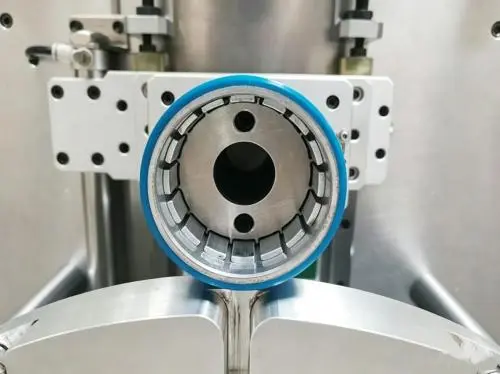
Understanding the Role and Function of Rotor Magnets in AC Motors
How Rotor Magnets Generate Motion in AC Systems
Interactions between electromagnetic fields are at the heart of how Rotor magnets for AC motors work. A spinning magnetic field is made when alternating current runs through the stator windings. The rotor has permanent magnets that lock onto this field and follow its movement. This turns electrical energy into mechanical motion. This synchronous relationship gets rid of all rotor copper losses, which is a problem with regular induction motors. This makes the efficiency levels close to the international IE4 and IE5 standards.
Permanent Magnet vs. Induction and Wound Rotors
Induction systems and permanent magnet blades are very different. Induction rotors use generated currents and slip to make power, which heats up and makes them less efficient when they're only partially loaded. Wound rotors need to be excited from the outside and have slip rings that are hard to keep up with. With permanent magnet designs, these problems don't happen, and the torque stays the same at different speeds without adding any mechanical complexity. Because of this, they are perfect for precise applications that need fast response times and low energy use.
Common Magnet Materials and Their Properties
Neodymium magnets are the most common type used in high-performance applications because they have very high remanence (Br) values, which range from 1.1T to 1.48T and allow for the highest flux density in small spaces. Ferrite magnets are cheaper and don't change much in temperature, but they lose some of their magnetic strength. Samarium cobalt works well in places with very high temperatures (up to 350°C), so it can be used in tools for drilling holes in the ground and in spacecraft. Choosing the right material depends on finding a balance between magnetic performance, thermal endurance, and the total cost of ownership over the life of the motor.
Key Benefits: Efficiency, Reliability, and Reduced Heat
Getting rid of rotor resistance losses directly increases the efficiency of the motor. When compared to induction motors, permanent magnet motors turn 92–97% of the power they receive into mechanical output. Less heat production makes insulation last longer, cuts down on cooling needs, and lets installations with limited space use more power. Because there aren't any brushes, commutators, or slip rings, there are fewer places where things can go wrong, which makes them more reliable. In industrial settings, repair times are longer than 15 years. All of these benefits add up to lower lifetime costs and more uptime for site managers who are in charge of mission-critical equipment.
Comparing Rotor Magnet Technologies in AC Motors: Choosing the Right Solution
Performance Trade-offs Between Magnet Types
To choose between neodymium and ferrite magnets, you need to know what the purpose is. Neodymium has a higher torque density, which means that smaller motors can be used in places with limited space, like robotic joints or e-bike hubs. Standard grades, on the other hand, lose their flow above 80°C, so special SH or UH grades are needed for under-hood uses in cars. Ferrite can naturally handle higher temperatures, but to get the same torque, the rotor diameters have to be bigger, which raises the cost of materials and the rotational inertia. When engineers define magnet grades, they have to look at thermal profiles, job cycles, and size limits.
Real-World Case Study: Electric Vehicle Traction Motors
Leading electric vehicle (EV) makers use radially magnetized arc-segment Rotor magnets for AC motors with an outer radius of 35.55 mm and an inner radius of 27.1 mm. This gives the magnets a radial diameter of 8.45 mm, which is best for high-speed spinning up to 18,000 RPM. At normal working temperatures, these CY35/CY36/CY37 series magnets keep their coercivity above 17 kOe, which keeps them from losing their magnetic field during times of high current. Segmented designs cut eddy current losses by 30–40% compared to solid rings. This directly increases range per charge, which is a key competitive metric for automakers that want to lead the market.
Total Cost of Ownership Analysis
A lot of the time, procurement teams only look at the unit price and don't think about how much money they can save on upkeep and energy costs. A full TCO model takes into account the cost of the magnet at the start, the improvement in motor efficiency over the course of 10 to 15 years of use, the savings on cooling system costs, and the decrease in downtime. When looking at the whole picture, permanent magnet motors have a 20–35% cheaper total cost of ownership (TCO) than induction motors for continuous-duty uses, even though they cost more up front. Warranty terms, like Angu's one-year promise that covers quality flaws, lower the risk of buying capital equipment even more.
Procurement Guide: How to Source Quality Rotor Magnets for AC Motors
Certifications and Quality Assurance Essentials
Rotor magnets for AC motors made for industry need strict quality control systems. IATF 16949 compliance means automotive-grade manufacturing discipline with advanced product quality planning (APQP) and production part approval processes (PPAP). ISO 9000 certification makes sure that processes are always controlled in the same way. Reports from SGS or similar labs that are not connected to the company prove the magnetic properties, size limits, and material makeup. Statistical process control, automated inspection equipment, and traceability systems that connect each batch to raw material certificates should all be checked out by procurement managers at suppliers' facilities.
Custom and Bulk Ordering Considerations
OEM motor makers need exact matching of dimensions to rotor lamination geometries. Reliable suppliers can meet specific needs based on CAD drawings or real samples. They can change factors like chord width (49.90mm) and axial length (63.30mm) to fit different stator designs. High-precision tolerances, which can be reached by wire EDM or grinding, make sure that the air gap is maintained properly and that the rotor parts are adjusted to meet G2.5 dynamic balance standards. While savings of scale help with bulk orders, lead times can reach 35 to 40 days for big production runs that need special tools to be set up.
Logistics and Warranty Protection
IATA's Dangerous Goods regulations for air freight must be followed when shipping magnetized materials across international borders. For container loads, sea freight is cheaper, but it takes 4 to 6 weeks longer to get to its destination. Express companies like DHL and FedEx can deliver small packages in 5 to 7 days, but they charge extra for their size and weight. To keep things from getting damaged in travel, packaging needs to have demagnetization protection, moisture barriers, and shock-absorbing materials. The warranty should clearly cover magnetic flux loss, rust breakthrough, and dimensional drift, and there should be clear replacement processes to keep production running as smoothly as possible.
Partnering with Experienced Manufacturers
Angu has been making permanent magnets for 20 years and has three invention patents and six utility model patents that cover improved magnetization techniques and surface treatment methods. Our ISO 9000 and IATF 16949-certified factories consistently fill 30-day lead times for radially magnetized rotor segments used in BLDC motors, power tools, and DC motors. We encourage OEM/ODM partnerships by working together on technical issues and helping R&D engineers find the best magnet geometries for the torque profiles they want while keeping costs low. Samples are ready in 10 to 15 days, which lets you test the prototype quickly before committing to mass production.
Troubleshooting and Maintaining Rotor Magnets in AC Motors for Optimal Performance
Identifying Magnetic Degradation and Demagnetization
A slow loss of performance is often a sign of magnetic flux loss due to heat, mechanical shock, or reverse field exposure during motor short circuits. Back-EMF tests at the rated speed, gauss meter spot checks on exposed magnet surfaces, and no-load current tracking for rises that mean Rotor magnets for AC motors' fields are getting weaker are some of the ways to find problems. If there is a sudden drop in torque and more vibration, it means that the magnet has come loose from the rotor hubs because the adhesive failed or the mechanical retention wasn't strong enough. The machine needs to be shut down right away to avoid a catastrophic rotor imbalance.
Preventive Maintenance Best Practices
Facilities that use motors in dirty areas should check the bearings, the cooling system, and the stability of the system every three months. These are all things that can affect the magnet's life in a roundabout way. Vibration analysis finds mechanical problems before they cause shock loads on rotor assemblies. Motors don't lose their magnetic properties permanently if they are used within certain temperature ranges. For CY36 grade magnets, constant contact above 120°C decreases performance noticeably after 5,000 hours of use. Protective steps, such as using thermal management systems that are the right size and avoiding locked-rotor conditions during regular starts, keep the magnetic properties for the entire design life.
When to Schedule Magnet Replacement
The timing of economic replacement strikes a balance between intervention costs and falling efficiency. Motors that lose 10-15% of their efficiency or 20 percent of their power from the starting point should have their magnets checked. In serious situations, like medical equipment, flight actuators, or tools for making semiconductors, replacing things before they break down at 70 to 80% of their predicted lifespan makes sure they work reliably. Facilities managers should keep magnet specifications and purchase records so that replacements can be quickly found when they're needed. This will cut down on unplanned downtime and production losses.
Future Trends and Innovations in Rotor Magnet Technology for AC Motors
Rare-Earth Magnet Alternatives and Material Innovation
Researchers are looking into making Rotor magnets for AC motors with less or no rare earth because the supply chain for neodymium and dysprosium isn't always safe. Heavy rare earth elements are only applied to the surfaces of grains in grain boundary diffusion technology. This lowers the dysprosium content by 30–50% while keeping the high coercivity. Metal-based permanent magnets and iron-nitride materials have shown potential in the lab, but they will not be commercially viable for years to come until they can be mass-produced on a large scale. Procurement teams should keep an eye on these changes and keep a variety of supplier relationships across production bases that are spread out geographically.
Additive Manufacturing and Design Flexibility
When joined magnets are printed in three dimensions, complicated shapes can be made that can't be made with traditional sintering and machining methods. It is possible to print directly Halbach array patterns and integrated flux concentrators, which make magnetic circuits work better for certain torque-speed profiles. At the moment, 3D-printed magnets work 60–70% as well as solid magnets, but this difference is getting smaller as new materials are developed. Rapid prototyping and low-volume production are good for early users in aircraft and custom automation because they lower the cost of making tools for custom motor designs.
Regulatory Compliance and Sustainability Pressures
European Union directives require more and more information about how electrical equipment can be recycled and how it affects the environment over its whole life. Motor makers must keep records of the magnet material's makeup so that rare earth elements can be recovered at the end of their useful lives through demagnetization and hydrometallurgical processing. RoHS compliance limits the use of dangerous chemicals in coatings and adhesives, which means that suppliers must be carefully screened. OEMs can better meet the needs of the circular economy by forming strategic relationships with providers that offer EPD (Environmental Product Declaration) approved magnets and take-back programs. These partnerships also lower the risk of future regulatory changes.
Conclusion
Rotor magnets for AC motors have completely changed how AC motors work, making them more efficient, reliable, and powerful in a wide range of industrial, automotive, and consumer settings. To be a good buyer, you still need to know the technical differences between magnet materials, understand the total cost of ownership, and buy from qualified manufacturers with proven quality systems. As technology moves toward rare-earth reduction and additive production, staying up to date on new materials and changes to regulations is important to stay ahead of the competition. Strategic relationships with suppliers based on technical teamwork, flexible customization, and quick support help engineering teams make the best motor designs while buying departments save money and make sure the supply chain is resilient.
FAQ
How do rotor magnets improve motor efficiency compared to induction designs?
By creating a constant magnetic flux without needing induced currents, permanent Rotor magnets for AC motors completely get rid of rotor copper losses. Slip, which is the difference in speed between the rotating field and the rotor, is a natural part of induction motors. It loses 5 to 10 percent of the power it receives as heat. Permanent magnet synchronous motors work at true synchronous speed with no slip losses, and they have efficiencies of 92 to 97% compared to 85 to 90% for similar induction motors. Over thousands of hours of use, this efficiency benefit adds up, lowering energy costs by a large amount in continuous-duty uses like HVAC systems and industrial pumps.
What factors determine whether to specify neodymium or ferrite magnets?
Material choice is mostly based on temperature exposure. Neodymium magnets offer the highest power in small areas, but they need higher grades (SH, UH, EH) to work above 80°C, which drives up their costs. Ferrite can handle 200°C for a long time without losing its magnetic properties, but it needs two to three times the volume of the rotor to have the same torque. When power density and moderate temperatures are important, neodymium is the best choice. On the other hand, ferrite is better in high-temperature or cost-sensitive situations, even though it has a bigger motor envelope. To meet the needs of everyone, engineers have to find the best mix between magnetic performance, temperature, space limitations, and budget.
What is the typical lifespan of rotor magnets in industrial motors?
Permanent magnets that are properly installed and used keep 95% of their initial flux density for another 15 to 20 years in controlled industrial environments. Thermal management is very important for a product's life—using it within its stated temperature range stops permanent changes in the microstructure that would otherwise cause demagnetization. Magnets need special features to keep them together in case they get broken or chipped by mechanical shocks from rough handling or high vibrations. Protecting against corrosion with Ni-Cu-Ni plating or epoxy coatings preserves the surface's integrity when it comes to chemicals and water. Regular maintenance that checks the health of the bearings and the working of the cooling system extends the life of the magnet by stopping it from working in an odd way.
Connect with Angu for Precision Rotor Magnet Solutions
For the best motor performance, you need to work with a Rotor magnet for AC motor provider that offers a wide range of expert services, high-quality products, and quick responses to your needs. Angu makes permanent magnets that are specifically designed for BLDC motors, power tools, and industrial drives. These magnets have a radial thickness of 8.45mm, a total height of 24.50mm, and high-precision tolerances that have been tested by a third party. Our CY35/CY36/CY37 grade materials are good for motors for electric vehicles, drives for e-bikes, and generator wheels that need to work well even when they're under a lot of stress. We support OEM partnerships from prototype to scale production, with 30-day delivery cycles and variable transportation such as sea freight, air freight, and express shipping. Our ISO 9000 and IATF 16949 certifications and full guarantee coverage back this up. Email our engineering team at chenrf@angu.com to talk about the details of your rotor magnets and get technical help making your motor designs more efficient, reliable, and competitive.
References
1. Boldea, I., & Nasar, S. A. (2016). Electric Drives: Third Edition. CRC Press, Taylor & Francis Group.
2. Gieras, J. F. (2010). Permanent Magnet Motor Technology: Design and Applications. CRC Press, Boca Raton, Florida.
3. Hendershot, J. R., & Miller, T. J. E. (2010). Design of Brushless Permanent-Magnet Machines. Motor Design Books LLC, Oxford, United Kingdom.
4. Jahns, T. M., & Soong, W. L. (1996). "Pulsating Torque Minimization Techniques for Permanent Magnet AC Motor Drives—A Review." IEEE Transactions on Industrial Electronics, 43(2), 321-330.
5. Zhu, Z. Q., & Howe, D. (2007). "Electrical Machines and Drives for Electric, Hybrid, and Fuel Cell Vehicles." Proceedings of the IEEE, 95(4), 746-765.
6. Sagawa, M., Fujimura, S., Togawa, N., Yamamoto, H., & Matsuura, Y. (1984). "New Material for Permanent Magnets on a Base of Nd and Fe." Journal of Applied Physics, 55(6), 2083-2087.
YOU MAY LIKE