Hook Type Commutator Manufacturer for DC Motor Applications
When procurement managers need to find suppliers of precision parts for making DC motors, they need to find companies that understand both the technical and business realities of global manufacturing. A hook type commutator is an important spinning electrical switch that lets DC motors reverse the flow of current. The quality of this switch directly affects how well the motor works, how long it lasts, and how reliably it works. When looking for a manufacturer, you should look at more than just the product specs. You should also look at the whole value chain, from where the materials come from and whether the innovations are patent-protected, as well as the shipping times and customer service that protect your production plans and bottom line.
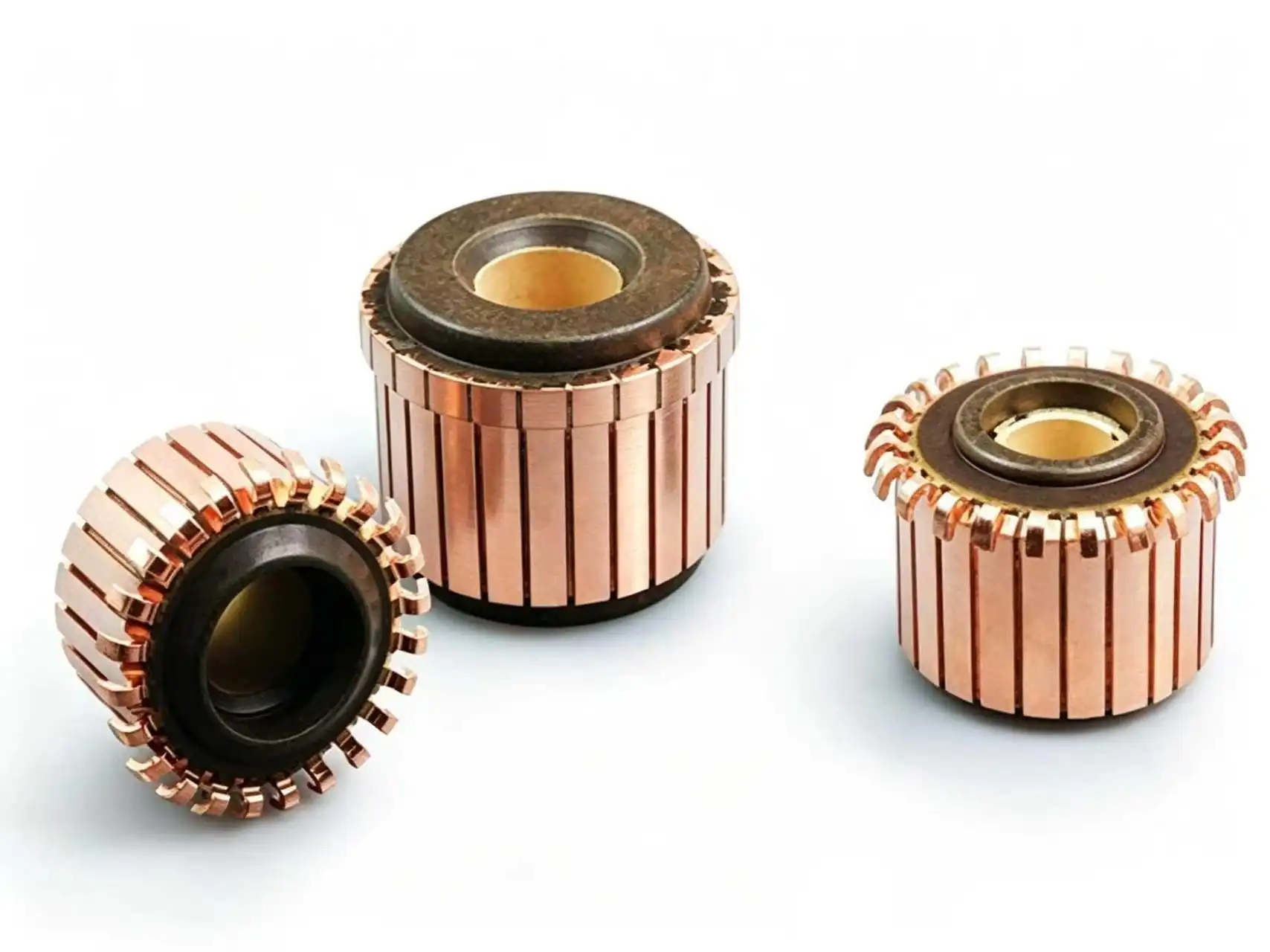
Understanding Hook Type Commutators and Their Role in DC Motors
The basic structure of a hook type commutator is different from other types because of its end layout. The armature windings are mechanically held in place by hook-shaped terminals. This makes a stable electrical path that handles current reversal while the motor is running. This design works especially well in fast situations where rotational forces can damage less strong connection methods.
Working Principles Behind Current Switching
The commutator segments carry current, and the carbon brushes keep in touch with the rotating assembly. The hook type commutator changes the direction of the current in the armature windings at exact intervals as the motor shaft turns. This creates constant spinning force. The hook type commutator connections hold the magnet wire in place without using cold solder joints. This gets rid of common failure points that make motors in car starting systems and industrial equipment work less well.
Structural Advantages in Industrial Applications
Automated high-speed wrapping methods can be used with hook type commutator designs, which lowers the cost of labour during mass production. Silver-copper alloys (CuAg0.1) are often used in the segments because they are good at both conducting electricity and resisting wear. Phenolic moulding compounds provide insulation that can withstand temperatures above 200°C. These materials can handle the changing temperatures and mechanical stress that you'll find in heavy equipment and hydraulic systems for building machines.
Performance Impact on Motor Efficiency
Good commutators keep the electrical resistance between segments as low as possible, which lowers power loss and heat production. Our 24-segment design, which has an outer diameter of 30.3 mm, an inner diameter of 12 mm, and a height of 22.8 mm, distributes power perfectly. The silver copper design keeps hardness values between HB 80 and 110, which keeps the dimensions stable when hoover cleaners and power tools are used at speeds over 25,000 RPM.
Types of Commutators Used in Electric Motors: Focus on Hook Type
Motor designers choose the type of commutator based on the needs of the application. Each type has its own costs, performance, and maintenance requirements.
Segmented Commutators Versus Slip Rings
Segmented commutators split the conducting surface into different bars that are insulated from each other. This makes it possible to precisely reverse the flow of current. Slip rings have continuous circular contacts that work well for AC applications but don't have the switching ability that DC motors need. When space is limited, hook type commutator segmented commutators work best in small motor designs that need reliable electrical connections even when the motor is shaking.
Riser Type Versus Hook Type Configurations
Riser type commutators have vertical posts that need to be wire wrapped by hand, which adds to the time and cost of putting them together. Automated winding tools can be used with hook type commutator connections to speed up production while keeping the wire tension constant. This benefit is very important for Tier 1 automotive suppliers who have to manage tight production plans for a lot of cars. This is because production efficiency has a direct effect on profits and delivery promises.
Material Selection Impact on Longevity
When carbon brushes rub against copper segments, they make a wear interface that tells you how often to do maintenance. Adding 0.1% silver raises the temperature at which the copper softens, which helps the pieces keep their shape during high-heat brazing. Our resin mixes pass dielectric strength tests up to 3000V, which is what ISO 9001 and IATF 16949 say is needed for automotive-grade parts like wiper systems and cooling fans.
How to Choose the Best Hook Type Commutator Manufacturer for Your DC Motor Needs
When making a procurement decision, you have to look at several factors about a manufacturer, not just the price, but also the total cost of ownership over the lifecycle of the product.
Quality Certifications and Compliance Standards
ISO 9000 and IATF 16949 certifications show that quality management systems have been in place for a while and that process controls have been written down. These guidelines make sure that suppliers keep the same size and finish requirements (Ra < 0.8μm), which keeps carbon brushes from wearing out. The SGS certification makes sure that the material's composition and performance are checked by a third party. This keeps buyers safe from specification deviations that could affect the reliability of motors in the field.
Engineering Support and Patent Portfolio
Manufacturers who have idea rights show that they can do more technical work than just making goods. We have three idea patents and six utility model patents that cover things like manufacturing methods and making designs better. This intellectual property can be used to help engineers with customisation projects where standard specs don't match up with the specific motor needs of farm equipment or factory automation gear.
Production Capacity and Delivery Reliability
Production management systems that are well-established and keep things the same across all orders are needed for batch quality to stay stable. We deliver 50,000 pieces in 30 days, which helps equipment assembly plants meet their regular buying schedules. Supply chain risk is directly affected by production capacity. When capacity isn't enough, sellers have to keep too much safety stock or accept delivery delays that stop manufacturing and break customer promises.
OEM and ODM Customization Capabilities
Different markets need certain sizes, numbers of segments, and types of materials. Our OEM services work with customer models, and our ODM partnerships use our engineering know-how to make ideas better. Minimum order quantities starting at 5,000 to 10,000 pieces are a good balance between the costs of tools and the number of pieces needed to start developing a new product. Long-term supply deals have lower start-up costs when tooling fees are refundable and applied to sales of 500,000 pieces or more within three years.
Logistics Flexibility and Global Reach
International buyers plan how to ship containers, fast air freight, and rapid courier services based on how quickly the order needs to be delivered and how they plan to handle their inventory. We can use sea freight for regular bulk deliveries, air freight for production ramp-ups, and DHL, FedEx, or UPS express for testing prototypes and making replacements quickly. This logistics infrastructure works with your supply chain planning, whether you have distribution centers in several areas or use central warehouses to combine shipments.
Maintenance and Troubleshooting of Hook Type Commutators in DC Motors
Hook type commutators in DC motors need to be maintained and fixed when they break. Preventive repair programs make hook type commutators last longer and cut down on unplanned downtime that slows down production and raises the total cost of ownership.
Common Failure Modes and Root Causes
It means that the brushes aren't making good contact because the surface is dirty, the segments are moving around, or the carbon brushes are worn out. Electrical noise comes from uneven resistance between bars, which can be caused by flaws in the manufacturing process or carbon buildup. Most of the time, hook type commutator breaking during wrapping processes is caused by bad copper annealing or too much strain. Our stress-relieving methods stop these problems by using controlled thermal processing.
Inspection Protocols for Quality Assurance
Incoming inspection procedures are used by procurement teams to check that suppliers' quality claims are true. Spin tests spin hook type commutators at 1.2 times their rated speed, measuring segment rise that means the bonding isn't strong enough. High voltage is applied between the bars and shafts in dielectric strength tests to find insulation breakdown before installation. Micro-ohm meters are used to measure the resistance between bars. This makes sure that the current flows evenly through all parts and stops hotspots that speed up wear.
Cleaning and Polishing Best Practices
Carbon dust and rust that raise contact resistance can be removed by regular cleaning. Solvents that aren't rough on surfaces can get rid of contaminants without hurting copper or phenolic insulation. Polishing brings back the surface finish to a certain level of roughness, which increases the life of the brush and lowers electromagnetic interference in electronics that need to be sensitive. These performance traits will stay the same as long as the motor is in use if you use quality replacement parts from approved manufacturers.
Future Trends and Innovations in Hook Type Commutator Manufacturing
As the industry changes, it is because of new technologies in materials science, industrial robotics, and quality control systems that change how suppliers compete.
Advanced Material Development
The goal of research into copper alloys that are more resistant to wear is to make repair times longer in high-duty-cycle uses. Carbon composite materials are better at conducting heat while still meeting electricity performance standards. Modern coating technologies keep hook type commutator segment surfaces from rusting and lower friction coefficients, meeting the needs of the car industry for longer guarantee periods and fewer repair needs.
Industry 4.0 Integration in Production
Vision inspection systems in automated manufacturing cells find differences in dimensions in real time, which makes process changes necessary before the flaws spread through production runs. Data analytics systems connect process parameters to quality results. This lets you make improvements all the time, which lowers the number of mistakes and improves consistency. Our investment in robotic technology gives us the freedom to customise while keeping the low prices that buyers expect from well-known brands.
Market Growth Drivers and Strategic Implications
Precision parts are in higher demand because electric motors are being used in more renewable energy systems, electric vehicles, and smart home devices. When the market grows, procurement workers who build ties with manufacturers who are thinking ahead get better access to production capacity. Our 20 years of manufacturing experience gives us the operational stability we need for multi-year supply agreements, and our patent portfolio makes sure that our technology stays up-to-date as performance needs change.
Conclusion
When looking for a trusted supplier for precision motor parts, you have to balance technical requirements with business concerns that affect the success of the partnership in the long run. Investing in hook type commutators is a must for improving motor performance and operating efficiency in electronics, industrial equipment, and cars. Manufacturers with quality licenses, technical skills, production capacity, and quick customer service after the sale offer more than just the price of individual parts. Procurement teams can get the best total cost of ownership while also making sure the supply chain is stable for ongoing production needs when they use proven knowledge, open customisation, and reliable logistics.
FAQ
Why should procurement teams choose hook type over riser type commutators?
Hook type commutators work well with automatic high-speed winding equipment, which cuts down on the cost of assembly labour and improves the accuracy of the connections. This is important for car providers who have to handle high-volume production because the efficiency of their workers has a direct effect on their profit margins. Because hook type commutator connections are mechanically stable, wires don't slip around when the motor is running. This makes the equipment last longer in places where vibrations are common, like building sites.
What factors cause premature commutator failure in DC motors?
Surface pollution from carbon dust buildup raises electrical resistance, which causes too much heat that breaks down segment bonds. When brush pressure isn't right, wear patterns aren't even, which makes sparking and electromagnetic interference worse. Using low-quality replacement parts with not pure enough copper or not enough resin curing weakens the insulation, which causes the dielectric to break down at normal operating voltages.
How do quality standards affect long-term motor reliability?
IATF 16949 compliance makes sure that producers keep statistical process controls in place that keep differences in size between batches of production to a minimum. Tolerances that stay the same make sure that the brushes touch properly and that the current flows evenly. This lowers the wear flaws that require early maintenance. Documented tracking in quality systems lets you find the root cause of problems in the field, which protects buyers from getting the same problems over and over again.
Partner with Angu for Reliable Hook Type Commutator Supply
Jiangsu Angu Electric Appliances Co., Ltd. has been making precision motor parts for 20 years and has ISO 9000 and IATF 16949-approved manufacturing methods. Our hook type commutator manufacturer offers flexible OEM/ODM services and is protected by 9 patents. We can deliver 50,000 pieces within 30 days to meet your production schedules. We offer free samples to make sure they work with your system, low prices for buying in bulk, and a warranty that covers everything to protect your investment. Our engineering team is here to help you with technical issues at every stage of the development process, whether you need standard 24-segment configurations or specifics for a completely new motor design. Email our buying experts at chenrf@angu.com to talk about your needs and get quotes that will help you get the best total cost of ownership. You can look at our full line of products at angu-group.com and learn how our supplier partnership can help you compete in the tough global markets.
References
1. Electric Motor Commutator Design and Manufacturing Standards, Society of Automotive Engineers Technical Paper Series, 2021.
2. Materials Science in Electrical Contact Applications: Copper Alloys for Commutator Segments, International Copper Association Engineering Handbook, 2020.
3. Quality Management Systems for Automotive Component Suppliers: IATF 16949 Implementation Guide, Automotive Industry Action Group Publications, 2022.
4. DC Motor Performance Optimization Through Commutator Design, IEEE Transactions on Industrial Electronics, Volume 68, 2019.
5. Preventive Maintenance Strategies for Electric Motor Components in Industrial Applications, Reliability Engineering and System Safety Journal, 2021.
6. Advanced Manufacturing Technologies in Precision Electrical Component Production, Journal of Manufacturing Processes, Volume 72, 2023.
YOU MAY LIKE