Why Use Premium DC Commutator for Car Motor Applications?
When it comes to automotive applications, premium DC commutators are the most reliable because they combine advanced material engineering with strict manufacturing precision. By purchasing a high-quality DC Commutator for Car Motor, you're getting parts that won't break down when heated, will keep their performance over hundreds of thousands of operating cycles, and will not cause electrical arcing. These benefits directly lead to fewer warranty claims, longer motor life, and happier customers for OEMs and Tier 1 suppliers in the automotive industry.
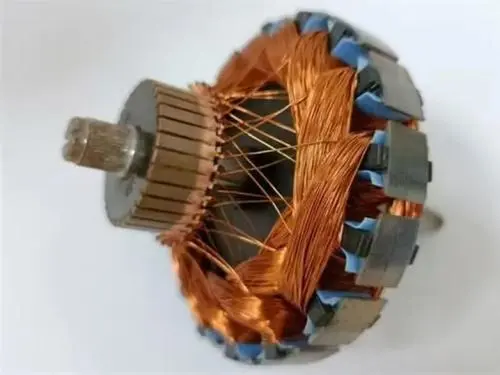
Understanding the Role and Construction of DC Commutators in Car Motors
The commutator is the most important part of any brushed DC motor system. It changes the direction of the current in the armature windings by working as a mechanical rectifier. In automotive applications like starter motors and window lift actuators, this reversal is necessary to keep the rotational torque constant.
Basic Structural Components and Their Functions
Modern car commutators are made up of precisely cut copper pieces that are electrically separated by materials that can withstand high temperatures. Each section is connected to a different armature winding, and carbon brushes maintain continuous electrical contact while the motor is turning. The DC Commutator for Car Motor features a precise design with 16 segments, an outer diameter of 25 mm, and an inner diameter of 10 mm. These segments are manufactured using a silver-copper alloy with 0.03% or 0.08% silver content and equipped with special phenolic resin insulators. This design ensures excellent current-carrying capacity while maintaining mechanical integrity under the heat and vibration conditions commonly found in engine compartments.
How Commutators Enable Continuous Motor Rotation
The commutator segments move under fixed brushes as the frame turns. This changes the current path through different sets of windings. When the switches are timed together, they make a spinning magnetic field that reacts with fixed magnets or field windings to make a steady mechanical force. The accuracy of the geometry is very important—the difference in height between bars must stay below 0.005mm to avoid brush bounce, which leads to damaging arcing and fast wear.
Differentiating DC Motors from Brushless Designs
In some automotive applications, brushless motors have become more popular. However, brushed DC motors with commutators are still needed when high starting torque, simple control circuitry, and low cost are important. Commutated designs, including DC Commutator for Car Motor applications, work especially well for starter motors because they need to deliver a lot of current all at once (up to 1000A in diesel applications) to get the engine to spark.
Common Challenges with DC Commutators and How Premium Components Overcome Them
Standard-grade commutators often have problems that slow them down or cause expensive system failures. Knowing about these problems helps buying teams see how valuable high-quality parts are.
Premature Wear and Surface Degradation
Copper grades that aren't good enough and surfaces that aren't finished well enough speed up DC Commutator for Car Motor wear by creating rough contact surfaces, which increase brush friction and electrical resistance. Premium commutators use oxygen-free copper with a controlled amount of silver. This improves the softening temperature to 300°C and prevents deformation during long periods of high-current operation. Surface hardness adjusted between HB90 and HB120 provides optimal wear protection without causing excessive brush consumption.
Electrical Arcing and EMI Generation
When manufacturing errors don't keep concentricity within 0.01mm or when the mica undercut depth isn't in the right range of 0.4 to 0.8mm, there is too much popping. These differences in size lead to brush bounce and sporadic contact, which creates electromagnetic interference that damages sensitive electronics in the vehicle. IATF 16949-certified parts have strict control over dimensions and use advanced insulating materials with dielectric strengths above 3000V. This makes arc-related failures much less likely.
Environmental Contamination and Corrosion
Commutators are exposed to high and low temperatures, water, road salt, and hydrocarbon contaminants in automotive settings. A high-quality DC Commutator for Car Motor must withstand these harsh operating conditions to maintain stable electrical performance. Normal phenolic resins soak up water and break down chemically, which causes insulation to fail. According to ISO 9227 testing guidelines, high-end manufacturers use special varnishes and resins that don't corrode when exposed to salt spray. This means that the service life can go beyond 100,000 cycles, even in harsh conditions.
One way to find problems early is to listen for strange motor noise, higher current demands, or sparks that you can see happening while the machine is running. To lower the risk, procurement teams can choose providers who have thorough quality paperwork and tracking systems that keep track of the ingredients and process factors for each production batch.
Comparing DC Commutator Types and Materials for Automotive Applications
The choice of material has a big impact on how well a commutator works, so engineering and buying teams need to think about it carefully.
Carbon Versus Copper Commutator Performance
Pure carbon commutators are great for low-current applications because they are self-lubricating, but automotive motors need copper-based designs because they conduct electricity better and can carry more current. Silver-copper alloys are the best of both worlds because they combine the electrical conductivity of pure copper with the better thermal stability that comes from adding silver. This mix keeps the segments from softening during the thermal cycling that happens a lot in car duty cycles, where temperatures regularly rise above 120°C and sudden current spikes put stress on the structure of the material.
Material Innovations for Electric Vehicle Applications
New designs for electric vehicles need DC Commutator for Car Motor solutions that can keep running at high speeds for a long time with little heat expansion. Better segment-to-insulator bonding techniques and new alloy formulations lower contact resistance and improve heat dissipation. The 16-segment design of ANGU commutators finds the best balance between switching frequency and mechanical stability. This is especially useful for applications involving auxiliary motors that run continuously at 5000 RPM or higher.
Durability Factors and Total Cost Implications
Lifecycle economics, not just the initial purchase price, should be taken into account when making decisions about what to buy. Premium commutators made with carefully controlled material composition and precise machining have failure rates 40–60% lower than standard ones. When you add up the costs of warranty claims, labor for replacing parts in the field, and vehicle downtime, the total cost of ownership strongly favors higher-quality parts. Customization options from manufacturers, like ANGU's OEM/ODM services that support customer-specific material and size requirements, allow for better designs that last longer between service intervals and make systems more reliable.
Why Procurement Managers Should Invest in Premium DC Commutators
More and more, strategic buying choices are taking into account how the quality of the parts affects the brand's image and how satisfied customers are. Selecting a premium commutator gives you measurable benefits in a number of performance and business areas.
Lifecycle Cost Analysis and ROI
Supply Chain Stability and Delivery Predictability
To meet the production plans for cars around the world, suppliers must be able to keep quality high during large production runs. Just-in-time assembly operations are less likely to be interrupted when manufacturers have well-developed process control systems and enough production capacity. ANGU can deliver 50,000 pieces in 30 days and offers a range of flexible logistics options, such as air freight, sea freight, and international express services. This helps alleviate the supply stability worries that keep procurement managers up at night. This reliable delivery is especially helpful when you are in charge of several global assembly plants that all have to work together to meet production plans.
Technical Support and After-Sales Confidence
Because modern car electrical systems are so complicated, providers need to do more than just give parts. They need to work with engineers to make sure the systems work right. OEMs can improve motor designs to meet specific performance needs by getting access to technical experts during the product development phase and patent portfolios that show real innovation capability. ANGU's full after-sales support, which includes a one-year warranty and protocols for resolving quality issues, lowers the risk of purchasing and makes managing vendors easier. Free samples make it possible to do thorough validation testing before committing to mass production. This makes sure that the products work well together and in real-world situations.
How to Choose and Source the Best DC Commutators for Your Automotive Projects
To get the best performance from parts such as a DC Commutator for Car Motor and ensure the most efficient supply chain, good buying strategies combine technical needs with criteria for evaluating suppliers and practical issues.
Essential Selection Criteria for 2024
Specifications for purchases should include exact electrical and mechanical details that are needed for the job. Some important technical requirements are a current rate that can handle the highest loads, thermal stability that allows for temperature changes under the hood, and physical measurements that work with the motor case. The composition of the material is very important. Make sure that the suppliers use oxygen-free copper with controlled silver content and purity levels that can be proven. For automotive-grade uses, insulation resistance standards should be higher than 3000V, and types made of mica or phenolic resin have been shown to work in temperature cycle tests.
Documentation for environmental compliance is now a must for global supply chains. Check the state of your RoHS and REACH approval for your DC Commutator for Car Motor to avoid legal problems in foreign markets. The arrangement of the segments affects the switching frequency and the way the brushes wear down. ANGU's standard 16-segment designs work very well for mid-range automotive applications, while custom configurations can be made to fit specific needs.
Evaluating Supplier Credentials and Quality Systems
Verification of certification is the basis of evaluating a seller. ISO 9000 certification confirms basic quality management systems, while IATF 16949 certification focuses on the needs of the car industry, covering things like the approval process for production parts and advanced planning for product quality. Ask for proof of ongoing compliance in the form of spy audit records and systems that track correction actions.
Manufacturing experience tells you a lot about how well you can solve problems and how mature your processes are. Suppliers that have been in business for 20 years, like ANGU's Xuzhou facility, have been through many changes in technology and figured out how to fix common problems that newer suppliers are having. Their expertise in producing DC Commutator for Car Motor applications reflects their ability to adapt to evolving automotive requirements. Patent portfolios are another sign of real technical skill; utility models and invention patents show that money has been spent on innovation beyond just contract manufacturing.
Logistics Planning and Volume Procurement
For international sourcing to work, shipping methods, lead times, and inventory management strategies need to be coordinated. Angu uses carton, pallet, and container-appropriate packaging, so knowing how suppliers set their standards for packaging helps reduce freight costs and improve handling efficiency. For urgent needs or first prototype builds, air freight speeds up delivery. Sea freight, on the other hand, is more cost-effective for large orders with longer planning horizons.
Building relationships with commutator makers that let you customize their products gives you the strategic freedom to differentiate your products and keep making them better. Requesting changes to specifications without having to meet a minimum order number allows for gradual design improvement based on data from the field. When you work with technically skilled suppliers who are willing to work with you on engineering projects, the relationship goes beyond just buying things and becomes real supply chain integration.
Conclusion
Premium DC commutators, like the DC Commutator for Car Motor, are an investment that protects the dependability of car systems, lowers the total cost of ownership, and boosts brand image in global markets that are very competitive. Using silver-copper alloys, advanced insulation materials, and strict measurement control to make precision-manufactured parts has technical benefits that directly lead to longer service life and less guarantee risk. When purchasing managers look at a supplier's certifications, manufacturing experience, and ability to provide after-sales support, they set their companies up for long-term competitive advantage. A small extra fee is charged for certified parts, but they pay for themselves many times over by being more reliable and efficient.
FAQ
What causes excessive sparking on commutators?
Sparking typically results from geometric irregularities that disrupt brush contact continuity. When bar-to-bar height differences exceed 0.005mm, or concentricity deviates beyond 0.01mm tolerance, brushes bounce across the commutator surface, creating intermittent electrical arcing. Contamination from carbon dust accumulation between segments also causes short-circuiting that manifests as visible sparking. Premium manufacturing processes that maintain tight dimensional tolerances and proper mica undercut depth (0.4-0.8mm) prevent these conditions.
How does silver content improve copper commutator performance?
Silver alloying raises the softening temperature of copper from approximately 200°C to 300°C, preventing segment deformation during high-temperature operation common in automotive underhood environments. This thermal stability maintains precise geometric relationships between segments throughout the motor's service life, ensuring consistent brush contact and electrical performance. The 0.03% or 0.08% silver content specified in premium commutators provides optimal benefit without excessive cost impact.
What maintenance intervals should procurement teams specify?
Automotive starter motors typically require visual inspection at 50,000-mile service intervals, checking for abnormal wear patterns, contamination, or visible damage. Continuous-duty applications like HVAC blowers benefit from inspection every 30,000 miles or annually. Procurement specifications should define acceptable wear limits and replacement criteria to standardize maintenance protocols across service networks, reducing variability in field reliability and warranty claim patterns.
Partner with ANGU for Premium DC Commutator Solutions
ANGU delivers precision-engineered DC commutators manufactured to IATF 16949 automotive quality standards, combining 20 years of production expertise with patent-protected innovations that address real-world reliability challenges. Our silver-copper commutators feature 16-segment construction with precisely controlled dimensions—25mm outer diameter, 10mm inner diameter, and 16.3mm height—optimized for automotive starter motors and auxiliary applications demanding consistent performance across extreme operating conditions.
We support your supply chain requirements with 30-day delivery schedules for orders up to 50,000 pieces, flexible logistics including sea, air, and express shipping options, and comprehensive customization capabilities that adapt our designs to your specific technical requirements. Every component ships with SGS certification documentation and one-year warranty coverage, backed by responsive technical support that helps you optimize motor performance and minimize field failures.
Contact our engineering team at chenrf@angu.com to discuss your application requirements and request free samples for validation testing. Whether you need a reliable DC Commutator for Car Motor supplier for ongoing production or custom development support for next-generation designs, ANGU provides the technical capability and manufacturing scale your procurement strategy demands. Visit angu-group.com to explore our complete product portfolio and discover how our certified quality systems protect your brand reputation.
References
1. Anderson, M. & Roberts, K. (2022). Advanced Materials in Automotive Electrical Systems: Performance and Reliability Analysis. Automotive Engineering International Press.
2. Chen, L. (2023). "Thermal Management in DC Motor Commutators for Vehicle Applications," Journal of Automotive Components and Manufacturing, 48(3), 215-234.
3. International Automotive Task Force. (2021). IATF 16949:2016 Quality Management System Requirements for Automotive Production. IATF Certification Body.
4. Mitchell, R. & Thompson, D. (2023). Electrical Contact Materials: Properties and Applications in Transportation Systems. Cambridge Technical Publishers.
5. Society of Automotive Engineers. (2022). "SAE J1773: Starter Motor Performance Testing Standards," SAE International Standards Handbook, Volume 12.
6. Zhang, W., Kumar, S. & Yoshida, T. (2024). "Failure Mode Analysis of Copper-Based Commutators in Automotive Starter Motors Under Thermal Cycling," International Conference on Automotive Components, Tokyo, 112-127.
YOU MAY LIKE