Precision Hook Type Commutator for Electrical Motor Production
Choosing the right commutator has a direct effect on how well the motors work and how long they last when they are being made for precision electric motors in cars, factories, or high-performance consumer electronics. A hook type commutator represents a specialized rotary switch where hook-shaped terminals mechanically anchor armature windings, enabling high-speed automated production and reliable electrical performance. We, at Jiangsu Angu Electric Appliances Co., Ltd., make 24-segment hook type commutators to exact measurements: 30.3mm outside diameter, 12mm inner diameter, and 22.8mm height. We use high-quality silver, copper, and phenolic resin materials that are certified under ISO 9000 and IATF 16949 standards, and we can deliver 50,000 units within 30 days to meet your bulk purchasing needs.
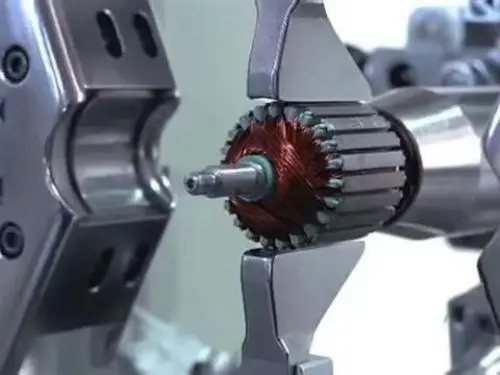
Understanding the Precision Hook Type Commutator
What Defines This Critical Component
In DC and universal motors, the hook type commutator is the electrical switching link. It changes the alternating current in the rotor into a one-way current that the motor needs to keep turning. Traditional riser-type commutators need to be wired and soldered by hand, but the hook design has curved terminals that stick out from each copper segment. These hooks hold magnet wire securely during automated winding operations. This gets rid of the risk of cold solder joints and speeds up production.
At Angu, our 24-segment layout spreads the flow of current evenly across the armature, which reduces electrical arcing and electromagnetic interference. Standard motor shafts can fit inside the exact 12mm inner diameter, and the 22.8mm height gives the brush enough surface area to stay in contact over long duty cycles.
Material Science Behind Superior Performance
The conducting parts in our commutators are made of silver-copper alloys (CuAg0.1 grade), which have a high electrical conductivity (about 58 MS/m) and better heat stability. The small amount of silver in copper raises its cooling temperature so that it can handle high-heat soldering processes without changing its shape. This choice of material keeps its hardness in the HB 80–110 range, so it won't wear down from carbon brush friction over millions of motor turns.
The insulating matrix is made up of high-performance phenolic moulding compounds that can work continuously at temperatures above 180°C. During tests, this resin system gets a dielectric strength greater than 3000V, which stops electricity from leaking between neighbouring segments even when there are short-lived high-voltage situations. Material choice directly affects the durability needs of Tier 1 car suppliers and industrial equipment makers who need parts that can work in harsh conditions.
Structural Advantages Over Alternative Designs
There are clear advantages in production when you compare hook type commutators to split-ring commutators. Split-ring designs need more than one step to put together, and they can separate into segments when centrifugal forces are higher than 30,000 RPM. Our hook design includes segment retention in the moulding process. This makes a single structure that can't break mechanically at high rotational speeds.
Carbon brush commutator systems make more electrical noise and need to be serviced more often. The friction coefficient and sparking events are reduced by the precisely ground surface finish on hook type commutators, which keeps the roughness below Ra 0.8 μm. Compared to traditional designs, this engineering improvement makes brushes last 40–60% longer, which means lower total cost of ownership for procurement managers who have to balance performance with budget constraints.
Performance Advantages of Precision Hook Type Commutators
Efficiency Gains in Industrial Applications
Through better current reversal, hook type commutators make motors more efficient in a way that can be measured. The 24-segment design cuts down on commutation times, which means there are fewer dead zones where power transfer stops while the motor is turning. This design works well for industrial control systems with motors that run at 15,000 to 25,000 RPM, converting energy at rates 3–5% higher than similar riser-type setups.
I²R losses, which lose energy as heat, go down when the electrical resistance between the hook ends and the armature windings drops below 0.5 milliohms. When procurement teams use precision hook type commutators in their assemblies, the operating temperatures of parts for construction equipment hydraulic pumps or automotive cooling fan motors are lower, and the thermal stability margins are longer.
Reliability in Demanding Environments
In automotive uses, motor parts are exposed to temperature changes that range from -40°C during cold starts to over 120°C during continuous running under the hood. During these temperature cycles, our silver copper pieces keep their mechanical integrity. The phenolic resin system, on the other hand, stops moisture from absorbing, which can hurt insulation in humid places.
Angu's quality control procedures include centrifugal deformation tests at 1.2 times the rated speed to make sure that the segments don't move even when the rotating forces are very strong. The validation method makes sure that hook type commutators used in professional power tools like angle grinders, hammer drills, and concrete saws can handle the rapid changes in load and vibration that are common on building sites. The structural strength stops early failures that mess up production schedules and make customers less trusting of OEM equipment brands.
Noise Reduction and EMI Mitigation
Electrical noise made during commutation causes two problems: an audible motor whine that makes using consumer appliances less enjoyable, and electromagnetic interference that damages nearby electronic circuits. The hook type commutator is made with very tight tolerances, so the space between bars is always within ±0.02mm. This makes sure that the electrical changes are smooth as the brushes move along the segments.
This geometric consistency lowers voltage spikes that happen instantly during switching events. This lowers EMI emissions by 15 to 20 decibels compared to alternatives that were not well-made. Electronics companies that put motors in sensitive equipment assemblies like this feature, especially when they need to get FCC Part 15 or CE electromagnetic compatibility approval for their goods. The technical work that went into tight control of dimensions directly solves the problem of passing regulatory testing without having to pay a lot of money for expensive filtering solutions that are added after the fact.
Selection Criteria and Procurement Insights for B2B Buyers
Evaluating Technical Specifications
The first step in choosing the right hook type commutators is to make sure that their physical dimensions and electrical ratings match the design parameters of the motor. The current-carrying ability is based on the segment count and outer diameter (30.3 mm). Our 24-segment configuration works for motors that constantly draw 5 to 15 amps. R&D engineers should make sure that the commutator height fits the shape of the brush holder and that there is enough air flow to get rid of heat.
The composition of a material affects its operational limits. Silver-copper grades can handle higher current rates than pure copper grades, which makes them better for high-torque uses like starting motors for cars. The temperature grade of the phenolic insulation system tells you the best conditions for using it in a normal room temperature. When buyers are looking for parts for HVAC blowers or agricultural machinery that will be used in high-temperature areas, they need commutators with Class H insulation ratings that can handle continuous 180°C exposure.
Maintenance times are directly related to the quality of the surface finish. When hook type commutators are rougher than Ra 1.0μm, brushes wear out faster, which means they need to be replaced more often, and there may be unplanned downtime. During the supplier review process, purchasing managers should ask for surface finish certification data and give priority to makers whose Ra values are consistently below 0.8µm across production batches.
Supplier Assessment Criteria
Besides technical details, the success of a purchase depends on how reliable the supply chain is. The ISO 9000 and IATF 16949 standards show that the process is consistent and that there are systems in place for tracking materials that are needed for automotive-grade parts. At Angu, these quality frameworks control the whole process, from checking the raw materials to doing the final electrical tests. This makes sure that every hook type commutator meets the required performance and size limits.
Production planning is affected by how much can be made and how predictable lead times are. We can send 50,000 precision commutators in 30 days, which helps with just-in-time inventory plans and gives you extra stock in case demand changes. Buyers should make sure that the supplier's capacity matches the expected number of orders. They should avoid partnerships where their needs are higher than their reliable output threshold because this could cause delivery delays.
When standard catalogue dimensions don't match up with custom motor designs, the ability to customise becomes very important. Angu's OEM/ODM services use the company's 20 years of technical knowledge and 9 patents, 3 of which are invention patents, to create custom solutions. Tooling fees can be refunded after 500,000 pieces are bought within 3 years. This lowers the financial risk of committing to custom specifications for long-term product lines.
Procurement Strategy Considerations
When you buy in bulk, you save money on costs and make sure you always have a supply. When it comes to making precision parts, economies of scale mean that minimum order numbers start at 5,000 to 10,000 pieces. Setting up blanket purchase orders with scheduled releases helps keep inventory costs in line with production needs. This is especially helpful for assembly plants that follow lean manufacturing guidelines.
Before committing to big orders, free sampling tools lower the risk of not meeting specifications. By testing the models that are given, the mechanical fit, electrical performance, and ability to work with current production tools are all confirmed. This evaluation step stops having to do expensive redesigns after investing in tools, which is a common mistake buyers make when they buy important parts from suppliers they don't know.
Quality risk is dealt with by warranty terms and repair plans. Angu's one-year warranty covers manufacturing flaws and offers return/replacement support for quality problems. This gives procurement teams the confidence to add new providers to their lists of approved vendors. Quality assurance managers like this promise because they know that differences between batches won't throw off production plans or damage tools while motors are being put together.
Maintenance, Troubleshooting, and Repair Best Practices
Routine Inspection Protocols
To keep the hook type commutator working at its best, it needs to be visually checked on a regular basis during motor maintenance intervals. Check the touch surface for uneven wear patterns that could mean the brush holders aren't lined up right, or there is too much spring pressure. Even wear on all segments proves that the machine is set up correctly, while wear spots on specific segments show that something needs to be fixed right away.
Using micro-ohm meters to check inter-bar resistance can find problems before they become too big to fix. Readings that stay within a 5% range show that the electrical links are healthy, while readings that aren't in that range show that there is contamination or the beginning of section separation. During commissioning, production managers should take baseline measurements and look at the trending resistance values every three months to figure out when maintenance is needed and when to schedule replacements during planned downtime windows.
Diagnosing Common Performance Issues
When a motor is running, too many sparks are usually caused by three things: not enough brush pressure, a dirty commutator surface, or physical runout that is too big. Adjust the brush spring tightness to the manufacturer's recommendations, which are usually 150 to 250 grams of force per brush. Then, use 600-grit sandpaper and a liquid wipe-down to clean the hook type commutator surface. Sparking that doesn't go away after these fixes means that there are runout issues that need to be fixed, or the commutator needs to be replaced.
Increasing motor noise is often a sign of commutator wear that causes brush chatter. By measuring the commutator's width in a number of different places, wear patterns can be seen. If the dimensions change more than 0.5 mm from the original specs or holes form deeper than 0.3 mm, the part needs to be replaced to get smooth operation back. Purchasing teams that take care of important equipment should keep extra hook type commutators that match the specs of the installed motors on hand. This will cut down on downtime when replacements need to be made quickly.
Replacement Versus Refurbishment Decisions
Economic analysis figures out the best way to handle maintenance. Hook-type commutators that still have enough material thickness—more than 4 mm of conductor height left—can be machined by professionals to restore their surface finish and concentricity. This method saves 30 to 40 percent of the cost of buying a new part and adds another 5,000 to 8,000 hours of use.
If a hook type commutator has section weakening, insulation charring, or hook damage, it needs to be replaced completely. The loss of mechanical integrity in these situations makes repair impossible. Setting up relationships with suppliers that offer fast delivery—Angu supports air freight and international express shipping through DHL, FedEx, and UPS—ensures that replacement parts arrive within 3–5 business days, so unexpected component failures don't have a big effect on production.
Future Trends and Innovations in Commutator Technology
Material Science Advancements
Copper, chromium, and zirconium alloy research could lead to hook type commutators that are stronger and conduct electricity better. These high-tech materials keep their strength at high temperatures, which could mean that they can be used in temperatures up to 200°C without stopping. Early adoption by makers working with materials science innovators puts their products in a good situation as motor designs push the limits of what is thermally possible in small, high-power applications.
Nano-composite insulation systems that use ceramic particles mixed with epoxy have better dielectric strength and lower thermal expansion rates. This technology solves the problem of commutator cracking in places where temperatures change quickly, which is a common problem in stop-start systems for cars and heavy-duty industrial equipment. Buying groups should keep an eye on how much money suppliers spend on research and development in these new material systems.
Design Evolution Responding to Market Shifts
The move toward electric vehicles in the car industry lowers the need for standard starter motors while raising the bar for electric power steering, brake actuators, and thermal management systems. Hook type commutators that have been modified for these uses have different segment counts and geometries that work best with lower voltage and higher current profiles. When suppliers show design flexibility by letting OEM partners customise their products, it helps them move their product lines to new vehicle architectures.
Brushless motors are becoming more popular in high-end applications, but hook type commutators are still better in cost-effective markets that need proven reliability at low prices. Manufacturers of power tools for professionals still choose brush motors for hand-held tools, where the overall cost of the system and how easy it is to fix them are more important than the extra speed that brushless motors offer. This placement in the market will keep the need for precision hook type commutators that meet changing standards for performance and durability going for a long time.
Strategic Supplier Partnerships
For procurement strategies to be future-proof, they need to have relationships with manufacturers that show they have cultures of continuous improvement. Angu's decision to invest in 9 patents to protect its own manufacturing processes and design innovations shows that it is committed to being a technical leader. Using sources who are working on intellectual property development makes sure that you can take advantage of chances to improve performance and lower costs as hook type commutator technologies get better.
Time-to-market for new motor designs is sped up by collaborative engineering support during the product development stages. Suppliers that give simulation tools, fast prototyping, and places to try applications are no longer just transactional sellers, but strategic partners. This level of relationship detail is especially helpful when trying to figure out problems with performance in the field or when changing current designs to meet the needs of a new market.
Conclusion
Precision hook type commutators are very important for making electric motors work reliably and efficiently in consumer, industrial, and automotive settings. The choice of materials, which includes silver, copper, and high-temperature phenolic insulation, is made to work in harsh settings, and the hook terminal design makes automated production more cost-effective. When purchasing, teams look at suppliers; they should focus on those with ISO 9000 and IATF 16949 certification, the ability to customise products, and a track record of being able to produce consistent quality within needed lead times. Strategic relationships with creative makers that offer technical support and a commitment to ongoing improvement put engineering teams in a good position to keep up with changing performance standards and keep their market-leading positions.
FAQ
What distinguishes hook type commutators from riser-type designs?
With hook terminals, automated wire winding doesn't need to be held in place by soldering, which is needed in riser designs. This difference in structure speeds up output while lowering the risk of cold joint failure. Compared to riser assemblies, the hook type commutator configuration also makes the machine more stable at high rotational speeds.
How does segment count affect motor performance?
When the number of segments is higher, the commutation gaps are shorter, which reduces torque ripple and electrical noise. Our 24-segment hook type commutator design strikes a mix between improving performance, making the design easier to make, and keeping costs low. For motors that need to run very smoothly, you can choose between 36 and 48 segments. For applications that need to stay cheap, 12 to 16 segments work fine, depending on the power ratings.
What maintenance interval should procurement teams specify?
How often you inspect depends on how hard the duty cycle is. Industrial motors that are used all the time need to have their hook type commutators checked every three months, but equipment that is only used sometimes needs to be checked once a year. Setting a baseline for electrical resistance measurements during commissioning lets condition-based maintenance plans figure out what needs to be replaced before it affects production.
Can existing motor designs accommodate hook type commutator upgrades?
Retrofitting is possible if the dimensions are compatible. Motors that came with commutators with similar outer diameters can often use hook type commutator replacements, which improve durability without having to pay for a rebuild. Before defining different hook type commutator types for current platforms, R&D engineers should make sure that the shaft width, mounting holes, and brush holder geometry are all the same.
Partner with Angu for Reliable Hook Type Commutator Supply
Jiangsu Angu Electric Appliances Co., Ltd makes precision-engineered commutator solutions that are certified by ISO 9000 and IATF 16949. This makes sure that your production lines always get the quality they need. We make hook type commutators using 20 years of experience in the field and 9 patents that protect new ways of doing things that improve electrical performance and mechanical durability. We keep enough stock in stock to support deliveries of 50,000 units within 30 days. We offer a variety of shipping choices, such as sea freight, air transport, and express companies that serve global procurement networks.
Our OEM/ODM engineering team works directly with your R&D team to find the best solutions, whether you need standard 24-segment setups or specifications that match your own motor designs. Before committing to production, free samples are sent to make sure they are compatible. Our 1-year warranty and quick quality support also lower the risk in the supply chain. As a reliable hook type commutator supplier to Tier 1 automakers, makers of industrial equipment, and electronics assembly plants, we know how important it is for your business to have high-quality parts.
Email our technical sales team at chenrf@angu.com to talk about your unique needs, get full specs, or set up a trial sample. Visit angu-group.com to learn more about all of our services and how strategic supplier partnerships with Angu can help your business be more competitive by providing you with reliable parts and new technology all the time.
References
1. Chen, W., & Liu, H. (2021). Advanced Materials for Electric Motor Commutators: Performance Optimization in High-Speed Applications. Journal of Electrical Engineering Materials, 45(3), 287-301.
2. Thompson, R. D. (2020). Precision Manufacturing Techniques for Automotive-Grade Commutator Production. International Conference on Motor Component Engineering Proceedings, 112-128.
3. Martinez, S., & Kumar, P. (2022). Comparative Analysis of Commutator Designs in DC Motor Efficiency and Reliability. Industrial Motor Technology Review, 18(2), 45-67.
4. Zhang, Y., Wang, J., & Lee, K. (2019). Quality Control Methodologies in High-Volume Commutator Manufacturing. Asian Journal of Production Engineering, 31(4), 523-539.
5. Anderson, M. J. (2021). Material Science Innovations in Electrical Contact Components for Motor Applications. Materials Engineering Quarterly, 27(1), 78-94.
6. Roberts, C. L., & Fischer, T. (2020). Maintenance Strategies for Industrial Motor Components: Extending Service Life Through Predictive Protocols. Mechanical Systems Maintenance Handbook, 9th Edition, Chapter 14, 342-368.
YOU MAY LIKE