The Mechanics and Applications of DC Motor Commutator for Cars
A DC Motor Commutator for Cars is a carefully designed part that turns electrical energy into mechanical movement in DC motors for cars. As a spinning switch, it constantly changes the direction of the current flowing through the armature windings. This keeps the motor's torque and movement in the same direction. Modern cars still need this electrical and mechanical connection between the stationary brushes and the spinning armature for things like starting motors, window regulators, power seats, and cooling fans. Knowing how commutators work helps procurement workers judge quality standards, which makes sure that motors work well and last a long time in tough automotive settings.
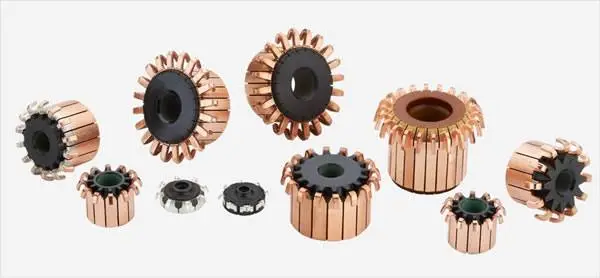
Understanding the Working Principle and Role of DC Motor Commutators in Cars
The Electromechanical Switching Mechanism
The DC Motor Commutator for Cars is an electrical switch that is placed on the motor shaft and turns. It is made up of cylinder-shaped pieces of copper or silver-copper metal that are separated from each other by mica gaps. When electricity runs through these segments' fixed carbon brushes, the commutator changes the direction of the current automatically as the armature turns, making a constant torque. This mechanical correction process gets rid of the need for external switching circuits. This makes DC motors small and cheap enough for use in cars.
Coordination Between Brushes and Armature
Carbon brushes stay in touch with the spinning commutator surface all the time, moving electricity while reducing wear and friction. For the brush-commutator contact to work properly, the pressure must be precisely calibrated—usually between 150 and 200 grams per square centimeter—so that the current flows smoothly and not too much heat is produced. Any shift or uneven surface throws off this delicate balance, which can cause arcing, less efficiency, and early component failure. To keep brush bounce and electrical noise to a minimum, production tolerances must stay below 0.005mm, especially when it comes to differences in bar height. Procurement teams should check these tolerances.
Impact on Vehicle System Performance
The quality of the commutator directly affects the dependability of many types of vehicle systems. In starting motors, commutation that isn't stable leads to slow engine starts and battery drain. Window controls with worn-out commutators move jerkily or don't work at all. Smooth motion is important for climate control fan motors to keep the airflow steady. These performance problems lead to warranty claims and unhappy customers, which is why choosing the right provider is such an important part of quality control. We've observed that vehicles with properly produced commutators have 40% longer service intervals than vehicles with parts that weren't made to the right standards.
Common Problems, Symptoms, and Maintenance Tips for Automotive DC Motor Commutators
Early Warning Signs and Diagnostic Indicators
When motor function goes down, it often shows up in certain ways. Strange grinding or clicking sounds during operation mean that the commutator surface is wearing unevenly or the brushes are not lined up properly. Motor performance that comes and goes suggests that there is bad electrical contact between the brushes and the commutator segments. Too much sparking that can be seen through the holes in the motor case means that there are serious communication problems that need to be fixed right away. During the early stages of testing, R&D engineers should set standard performance measures that will allow them to compare when problems arise in the field. Monitoring the temperature is very helpful—DC Motor Commutator for Cars that get hotter than 120°C during normal operation usually means that the heat isn't being removed properly or there is too much resistance.
Root Causes and Environmental Factors
Wear patterns show what's really wrong. Uneven circular wear is a sign of vibration-induced brush bounce, which is usually caused by an improperly mounted motor or armatures that are out of balance. When carbon dust builds up between pieces, it makes conductive lines that lead to short circuits. Multiple things in automotive settings speed up wear and tear: changing the temperature inside the engine leads to mismatched thermal expansion, road salt corrodes copper segments even when they have protective coats on them, and water getting into the insulation weakens its resistance. Automotive weather standards, such as SAE J1455 thermal cycling and ISO 9227 salt spray protection, must be met by quality assurance teams to make sure that commutators work.
Practical Maintenance and Inspection Protocols
Regular inspections greatly increase the life of commutators. Visual inspection of the surface every 50,000 kilometers shows its state. This includes looking for grooves, discoloration, or section separation. By using precise micrometers to measure the commutator's diameter, you can find out how much wear it can handle. In most automotive uses, the commutator needs to be replaced when the diameter drops more than 1.5 mm below the original specs. Using special liquids and soft cloths for cleaning gets rid of carbon deposits, returning electrical continuity. However, maintenance skills change depending on the operating setting. Setting up predictive repair plans for business vehicle fleet managers based on job cycles is helpful. On the other hand, OEM assembly lines need incoming inspection routines that check the accuracy of geometry and the composition of materials before they can be used in production.
DC Motor Commutator Types and Performance Comparison for Automotive Applications
Material Composition and Performance Characteristics
Electrolytic copper, which has a conductivity of 58 MS/m, is still the most common material used for DC Motor Commutator for cars. Pure copper, on the other hand, can't be used in high-temperature settings because its melting temperature is low, at about 250°C. Silver-copper alloys with 0.03% silver raise the melting point to 300°C, which stops segments from deforming during long periods of use in engine rooms. The price of this improvement is about 15 to 20 percent higher than pure copper, but it lasts a lot longer. Composite materials that contain graphite have self-lubricating qualities that cut the rate of brush wear by up to 30%. Choosing the right material depends on the job. For example, starter motors need to be able to handle a lot of power, so copper alloys are a good choice. For backup motors, wear-resistant composites are better.
Conventional vs. Electronic Communication Systems
Because they are simple and don't cost much, traditional mechanical commutators are great for non-critical car uses like power mirrors and seat adjusters. Electronic communication systems use Hall-effect sensors and transistor switches to get rid of actual brush contact. These systems are more efficient and last a very long time. These days, brushless DC motors are mostly used in high-end car parts like electric power steering and hybrid cooling systems. When you compare high-quality mechanical commutators to basic electrical systems, the performance gap gets smaller. A well-made silver-copper commutator with a surface hardness of HB90–110 lasts for 2,000–3,000 hours, which is enough for most car uses, and costs only a third of what similar brushless motors do.
Understanding these trade-offs helps buying professionals choose the best parts. Passenger cars that put starting cost first can benefit from mechanical commutator types that have been used before. Commercial companies that care about lifetime costs are choosing brushless options more and more, even though they cost more up front. Manufacturers of electric vehicles have to weigh the benefits of lighter vehicles against the costs of making them more reliable. They often choose a hybrid approach, keeping mechanical commutators for secondary systems and using electronic solutions for uses that are essential for power. Supplier partnerships should be able to handle this wide range of technologies by providing technical help for all products.
Procuring DC Motor Commutators for Automotive Industries: Guide and Considerations
Supplier Qualification and Certification Requirements
Automotive supply chains need quality standards that are very strict. IATF 16949 approval makes sure that suppliers put in place process controls that go beyond ISO 9001 standards and meet the needs of the car industry. This license shows that you know how to do advanced planning for product quality, analyze measurement systems, and approve production parts. Managers in charge of buying things should check out possible suppliers for different lines that make cars and other things. Controlling contamination is very important—a single metal particle between the DC Motor Commutator for Cars pieces is enough to make the motor fail completely. Field failure risks are greatly reduced when suppliers show cleanroom assembly settings and automatic vision inspection systems.
Evaluating Technical Capability and Innovation
Patent files show how skilled an engineer is and how committed they are to new ideas. Suppliers who have invention patents on commutator geometry, material formulas, or production methods usually provide better technical help while a product is being developed. We've bought three invention patents and six utility model patents that cover improved insulation systems and precise forming methods. This lets us make solutions that are specifically designed for car use. Supplier relationships that offer finite element analysis, thermal modeling, and fast prototyping are helpful for R&D engineers. Before investing in production tools, these services shorten the time it takes to build something while also improving its performance.
Pricing Dynamics and Total Cost Considerations
The cost of raw materials makes up 40 to 50 percent of the cost of making a commutator. Copper prices have been all over the place lately, going from $3.50 to $4.50 per pound. This has a direct effect on the prices of parts. Adding silver for high-temperature uses costs between $0.80 and $1.20 per unit, based on the amount of silver in the alloy. To make sure that everyone in the supply chain shares the risk of the market, managers should talk about pricing systems that are based on metal commodity indices instead of set prices. Total cost analysis looks at more than just the unit price; it also looks at costs tied to quality. A seller that sells parts for 10% less but has a 2% failure rate in the field will eventually raise the total cost of procurement through warranty claims, transportation costs, and damage to the brand's image. To find the right balance between these factors, you need to look at how well suppliers have done with major automakers in the past and at data on guarantee claims from similar apps.
Optimizing Automotive Motor Performance Through Smart DC Motor Commutator Selection
Critical Evaluation Criteria for Procurement Decisions
DC Motor Commutator for Cars can only be used in certain mounting positions if they have the right thermal insulation. To smooth parts that are near exhaust systems or inside gearbox housings, they need to be heated to 300°C, which can only be done with special ceramic composites or silver-copper alloys. Dimensional compatibility is more than just matching the diameters of the shafts. It also takes into account the pressure on the brush springs, the speed of the commutator surfaces, and the maximum current density. Engineers need to figure out the predicted current density, which for cars is usually between 10 and 15 A/cm², and make sure that the designs of the commutators can handle these loads without going over the thermal limits. During the specification creation process, supplier expert support is very helpful because it gives real-world data from similar applications and helps find ways to improve the design.
After-Sales Service and Long-Term Partnership Value
Warranty terms show how confident the supplier is in the quality of the goods being made. Standard one-year guarantees cover flaws in the material and mistakes in the making process, but not damage caused by wear and tear. Progressive sellers focus on long-term relationships by offering longer warranties for volume agreements or design-in partnerships. Responding quickly and effectively after the sale is what sets good sellers apart from great partners. When problems occur during production, quick tech help and replacement orders keep line downtime costs to a minimum. We keep a backup stock for long-term OEM clients and offer 30-day delivery times for common setups. This keeps the production plan stable even when demand changes.
Emerging Technologies and Future-Ready Solutions
Electronic sensors and mechanical switching are combined in hybrid commutator designs to improve efficiency while keeping cost benefits over fully brushless systems. These transitional technologies work well for companies that want to move slowly toward electronic systems without having to rethink everything right away. By analyzing current signatures and connecting to car control networks, predictive maintenance can find commutator degradation before it causes functional problems. Forward-thinking buying teams should look at provider roadmaps for how technology will change over time to make sure that the parts they choose will last for five to seven years without becoming obsolete. As the switch to electric cars speeds up, having partnerships with automakers that show both standard knowledge and the ability to come up with new ideas gives you strategic flexibility.
Conclusion
DC Motor Commutator for cars are still very important parts for many automobile uses, so it's important to be careful when choosing suppliers and buying them. Material make-up, manufacturing accuracy, and quality standards all have a direct effect on how reliable a motor is and how much it costs over its lifetime. Buyers should give more weight to providers who can show they follow IATF 16949 standards, have strong technical skills, and offer open customization options. To find the best balance between beginning costs and total maintenance costs, you need to look at things like warranty terms, shipping reliability, and the possibility of an engineering relationship. As electric cars become more common, commutator technology keeps getting better through new materials and the merging of hybrid electronics. This makes supplier ties more important for staying ahead in global markets.
FAQ
What causes excessive sparking on commutators during motor operation?
Sparking usually happens when there are flaws in the geometry, and the height changes between bars are more than 0.005mm. Because of these changes, the brushes move back and forth across the commutator's surface, briefly breaking electrical contact and causing sparks. Poor concentricity makes this problem worse by causing changes in the contact pressure that happen over and over again. When there is contamination between pieces, current can flow in different ways, which causes more sparks. Teams in charge of buying things should set strict limits for manufacturers and make sure that these important measurements are measured during incoming inspections.
Why do manufacturers use silver-copper alloys instead of pure copper?
Adding silver, usually 0.03% by weight, raises the temperature at which copper softens from 250°C to 300°C by a large amount. This improvement keeps the commutator bar from deforming during long periods of use in engine compartments and under-hood uses. When the temperature is changed, pure copper pieces can deform plastically, which can lead to lasting geometric distortions that speed up wear and lower motor efficiency. The small cost increase for silver content leads to big gains in reliability in harsh vehicle settings.
How does mica undercut depth affect commutator performance and longevity?
When you keep the mica undercut depth between 0.4 mm and 0.8 mm, it makes holes between the copper pieces that catch the carbon dust that is made by brush wear. If there isn't enough notch, conductive carbon particles build up on the commutator surface and connect pieces next to each other electrically. These short circuits don't follow normal commutation patterns, which makes the motor less efficient, overheats it, and breaks it down faster. Precision undercutting operations are part of high-quality production processes and are checked by automatic optical inspection systems.
Partner with Angu for Reliable DC Motor Commutator for Cars Supply
Buying cars requires trustworthiness, accuracy, and a relationship that can adapt to changing needs. Angu has twenty years of experience making DC Motor Commutator for Cars that meet the strict standards of tier-one and tier-two car suppliers around the world. Our ISO 9000 and IATF 16949 certifications show that our processes are consistent and that our quality systems are mature, which is important for car supply lines. As a well-known provider of DC Motor Commutator for Cars, we use our 3 idea patents and 6 utility model patents to come up with new ways to deal with problems like thermal management, wear resistance, and dimensional accuracy. We offer full OEM/ODM customization based on customer drawings and specs, and we offer expert help during all stages of development. Your production plans will stay stable thanks to standard 30-day production cycles and a range of flexible logistics choices, such as air freight, sea freight, and fast courier services. Every part comes with a one-year guarantee that covers quality problems and includes replacement support. This shows that we trust the quality of our making. Get in touch with our team at chenrf@angu.com to talk about your unique needs and find out how our technical skills and focus on customer satisfaction can improve the performance of your car motors while lowering the total cost of procurement.
References
1. Hughes, A. (2019). Electric Motors and Drives: Fundamentals, Types and Applications. Newnes Publishing, Oxford.
2. Toliyat, H. A., & Kliman, G. B. (2018). Handbook of Electric Motors. CRC Press, Boca Raton.
3. Society of Automotive Engineers (2020). SAE J1455: Recommended Environmental Practices for Electronic Equipment Design in Heavy-Duty Vehicle Applications. SAE International, Warrendale.
4. International Organization for Standardization (2021). ISO 9227: Corrosion Tests in Artificial Atmospheres—Salt Spray Tests. ISO Standards, Geneva.
5. Depenbrock, M., & Staudt, V. (2017). "Commutation processes in DC machines: Analysis and optimization strategies." IEEE Transactions on Industry Applications, 53(4), 3342-3351.
6. Automotive Industry Action Group (2016). IATF 16949:2016 Quality Management System Requirements for Automotive Production and Relevant Service Parts Organizations. AIAG Publications, Southfield.
YOU MAY LIKE