What Should Repair Companies Know When Buying Commutator Rebuild Parts?
When repair companies source commutator rebuild parts, they face critical decisions that directly impact motor reliability, operational downtime, and maintenance budgets. High-quality rebuild components—including copper segments, mica insulation, V-rings, and reinforcement assemblies—restore electrical and mechanical integrity without costly full motor replacement. Selecting certified rebuild parts with precise dimensional tolerances and proven material composition ensures optimal current rectification, minimizes brush arcing, and extends armature lifespan by 150-200%. Understanding technical specifications, supplier certifications, and procurement strategies empowers repair professionals to make informed decisions that balance performance, cost efficiency, and long-term reliability in demanding industrial environments.
Understanding Commutator Rebuild Parts and Their Importance
What Commutator Rebuild Components Include
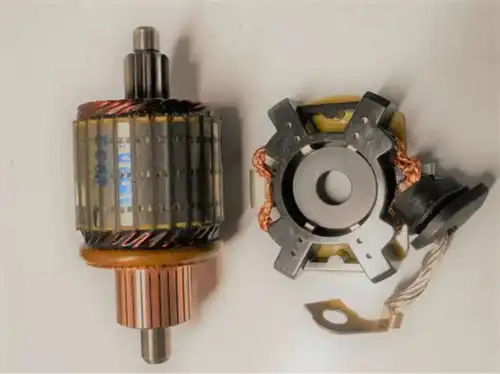
Commutator rebuild kits have special parts that are designed to get motor commutators working like they did when they were first made. Copper segments made from high-conductivity electrolytic tough pitch (ETP) copper or silver-bearing copper alloys are common examples. Other types include mica insulation sheets with dielectric strengths above 20 kV/mm, V-rings made from epoxy or alkyd-vinyl bonded mica, riser plates, and steel reinforcement rings. When a single part fails, easy replacement parts can fix it. But comprehensive rebuild kits offer solutions that are meant to work together, keeping the electrical balance and accuracy that are necessary for high-speed motor operation.
Recognizing When Rebuilding Becomes Necessary
Motor workers can tell when the commutator is breaking down in a number of ways that mean it needs to be rebuilt instead of just being maintained regularly. Too much brush sparking while it's running means that the electrical contact is bad or that there are problems with the segments. When there is a load, power loss usually means that the resistance has gone up because of worn copper pieces or damaged mica insulation. Overheating centered around the commutator assembly could mean that the current isn't balanced or that the insulation is breaking down because of carbon dust and thermal aging. Getting these problems fixed quickly by a professional rebuilding stops catastrophic failures and keeps expensive armature windings from getting damaged in a way that can't be fixed.
Economic and Operational Advantages of Rebuilding
When repair shops rebuild commutators instead of replacing whole motors or armatures, they save a lot of money. Rebuild costs are usually between 15% and 25% of the cost of a new motor, but they give the same performance and last longer. This method cuts down on machine downtime because rebuild wait times are measured in days instead of the weeks it takes to get a new motor. Saving materials and cutting down on waste are two ways that environmental sustainability can help. When you rebuild, you keep the motor's specific configurations and fitting requirements. This gets rid of the compatibility issues and installation changes that come with replacing motors in factories using quality commutator rebuild parts.
Key Factors to Consider When Purchasing Commutator Rebuild Parts
Material Composition and Technical Specifications
Professionals in procurement have to look at rebuilt parts based on exact material properties that affect how well they work. X-ray fluorescence (XRF) research shows that silver-bearing copper segments have a fixed amount of silver (usually 0.03-0.08%). This makes the softening temperature higher than that of regular copper to keep the segments from deforming during high-load thermal peaks. To keep resistive heating to a minimum, conductivity ratings should be at least 97% IACS (International Annealed Copper Standard). The thickness of the mica separator can be anywhere from 0.5 mm to 1.2 mm, depending on the inter-bar voltage needs. Consistent Shore hardness ensures that the wear patterns are uniform.
With an outer diameter of 21.5mm, an inner diameter of 8.2mm, and a height of 13mm, the ANGU 24-segment commutator is a great example of precision engineering. These parts are made from a silver-copper alloy and a resin composite. They have to be within ±0.02mm in size tolerances to keep the mechanical balance. Each segment is tested for bar-to-bar hardness stability (80–105 HV range) and meets Class H thermal standards (180°C constant operation). This means they can be used in tough traction motors, steel mill drives, and naval propulsion systems.
Quality Certifications and Compliance Standards
Repair shops that work on cars, trucks, and construction equipment need suppliers who have quality certifications that are recognized around the world. Getting ISO 9000 approval shows that you are dedicated to using consistent quality management systems and production methods. IATF 16949 compliance directly handles the needs of the automotive industry to avoid defects, cut down on variation, and reduce waste at every stage of the supply chain. SGS approval is an independent check of the material's make-up, precision of measurements, and performance traits.
ANGU has been making things in Xuzhou, Jiangsu, for 20 years and has ISO 9000 and IATF 16949 certifications. Their quality control procedures include Hi-Pot testing to make sure the dielectric barriers between segments are correct, spin-seasoning tests at 1.2x rated RPM to make sure the dynamic balance is correct, and full traceability documentation for batch-based procurement. These approvals give purchasing managers peace of mind that commutator rebuild parts will meet business needs and legal requirements in all global markets.
OEM Versus Aftermarket Parts Evaluation
When choosing between OEM and aftermarket rebuild parts, you have to weigh the cost and the promise of accuracy. OEM parts are guaranteed to work perfectly with the original motor, keep the warranty valid, and give consistent performance based on technical data from the maker. However, higher prices and longer wait times may make it hard to meet budget limits and urgent repair plans. Certified aftermarket suppliers like ANGU can make OEM and ODM products and have patent-backed innovations (3 invention patents and 6 utility model patents). They can offer similar quality at competitive prices and can also make products to order based on customer drawings and specifications.
Instead of just looking at classification, procurement teams should judge sellers based on their expert skills. Important things that are used to judge a product are its material approvals, measurement inspection reports, thermal and electrical testing records, and the performance history of previous customers in similar situations. ANGU gives away free samples so that customers can try them before placing large orders. This lowers the risk of purchasing and makes sure that the products work with the way motor repair is normally done.
Comparing Commutator Rebuild Kits Versus Replacement Parts
Cost-Benefit Analysis Framework
When compared to full commutator replacement assemblies, rebuild kits require less money up front. A full rebuild kit usually costs 40 to 60 percent less than brand-new replacement parts and lasts 85 to 95 percent as long as the original equipment did when put properly. When a lot of cars need regular repair, this good return on investment is especially appealing for motor fleets. Bulk purchasing agreements with manufacturers like ANGU lower per-unit costs even more through volume discounts. This makes systematic rebuilding programs economically viable for industrial repair facilities that are in charge of hundreds of motors in places like steel plants, mining operations, or assembly lines for cars.
When figuring out the total cost of ownership, you have to take into account things like labor for installation, possible changes in downtime, and guarantee coverage. Rebuild procedures need specific skills and precise tools, but they use existing armature cores, which cuts down on the cost of core winding. ANGU's one-year warranty on commutator rebuild parts gives you the same level of quality security as OEM replacement parts. They also send orders up to 50,000 pieces in 30 days, which helps you plan your inventory and keeps emergency procurement costs to a minimum.
When Complete Replacement Becomes Necessary
For some types of failure, rebuilding is not possible or is unsafe, so a full replacement is needed. If there is severe damage to the armature core from failing bearings, contamination that breaks down the insulation on the windings, or shaft deformation, new parts are needed instead of just fixing the commutator. Motors that are getting close to the end of their useful life and have multiple subsystems that are breaking down are better replaced with new ones that are more efficient and have more up-to-date safety features. When rebuild costs get close to 65% to 70% of replacement costs, cost thresholds change. This is especially true if shorter service intervals are expected.
Repair companies that work on traction motors for mining and rail applications have to think about safety-critical performance in addition to other things. In these settings, parts need to be able to handle constant shaking, high-torque start-stop cycles, and harsh environmental conditions. ANGU's silver-copper segments don't bend or break under these stresses, but motors that have a history of repeated failures may need to be replaced completely to make sure they are safe to use and follow the rules.
Best Practices and Essential Tools for Commutator Rebuilds
Step-by-Step Rebuild Procedure Overview
Professional commutator repair follows a set of steps that make sure the dimensions are correct and the electrical purity is maintained. The first step in disassembly is to carefully record the orientation of each section, measure the current components' sizes, and look for wear patterns that could point to problems with the motor itself. To remove a segment, controlled heating is needed to soften the bonding resins without hurting the armature cores. This must be done after thoroughly cleaning off any insulation and carbon deposits that are still on the segment. Installing new mica insulation requires precise positioning within segment slots, keeping the thickness and alignment of the insulation the same.
Installing segments uses hot-pressing methods that apply V-ring pressure evenly during multiple cycles of heating and tightening. This stops the bars from lifting and makes sure the mechanical bonds are strong. Final cutting brings back the cylinder shape within certain limits, making the surfaces smooth so that brushes can stick to them best. Checks for quality include measuring the electrical resistance between segments that are next to each other, looking for differences in mica protrusion or recess, and making sure the dynamic balance is correct. For normal industrial motors, these steps take 6 to 12 hours, but when done by trained techs, they guarantee reliable performance close to factory-new standards.
Specialized Tooling Requirements
The right tools and equipment are needed for rebuilding to go smoothly. Some important tools are undercutting machines for making mica slots, segment insertion clamps that keep the exact angle spacing, heating equipment for melting glue in a controlled way, and precision micrometers that can measure sizes to within 0.02mm. Using carbide tools on turning lathes, final surfaces are machined to the required level of smoothness. Multimeters and megohmmeters check the values for segment resistance and electrical isolation when using high-quality commutator rebuild parts.
Maintenance Tips for Extended Service Life
When commutators are replaced with high-quality parts like ANGU's silver-copper pieces, preventative maintenance makes the time between operations longer. Regular inspections (every 500 to 1000 hours of use) find early signs of wear before they cause major damage. Cleaning regularly gets rid of the buildup of carbon dust that speeds up the breakdown of insulation and raises contact resistance. Checking the tightness of the brush spring makes sure that the pressure stays the same, which is important for keeping the patina coats stable for low-friction operation.
Avoiding common mistakes makes rebuilds last a lot longer. Instead of an aggressive first operation that wears out segments too quickly, the right way to break them in is to slowly build up the best patina layers. Galvanic corrosion can be avoided by using certain brush grades that are compatible with the composition of copper alloys. Monitoring the operating temperatures makes sure that the cooling system is working properly and stops damage from thermal stress. When these steps are taken, and good replacement parts with Class H thermal values are used, the machines usually last between 3 and 5 years in industrial settings.
Procurement Strategies for Buying Commutator Rebuild Parts
Evaluating Supplier Reliability and Service Capabilities
When choosing commutator rebuild parts providers, you need to do more than just compare prices. Reliable delivery has a direct effect on when repairs are scheduled and what equipment is available, so it is important to have consistent lead time performance. With ANGU's 30-day production cycle for orders up to 50,000 pieces, maintenance programs can be planned with confidence. Logistics flexibility that supports sea freight for big packages that save money, air freight for urgent needs, and international express (DHL, FedEx, UPS) for important replacements makes sure that the supply chain is supported quickly across all activities around the world.
Leveraging Volume Purchasing and Negotiation Strategies
Technical responsiveness is what sets great suppliers apart from average ones. Having access to technical support can help with questions about compatibility, improving rebuild processes, and figuring out why some things are failing in strange ways. ANGU's patent collection (3 invention patents and 6 utility model patents) shows that it can keep coming up with new ideas and solutions for motor technologies that are changing. Long-term partnership satisfaction can be predicted by how quickly and well a company responds to customer questions, provides samples, and helps customers after the sale.
Balancing Quality Against Total Cost of Ownership
Strategic bulk buying deals help repair companies that manage fleets of cars save a lot of money. Volume agreements lower the price per unit while making sure that production schedules and stockpiles are prioritized when supplies are low. Total value is maximized by negotiating terms other than price, such as longer payment terms, consignment inventory arrangements, and the provision of technical training. ANGU's desire to change specs backs up efforts to standardize parts so that they can be used on multiple motor types. This makes managing inventory easier and lowers the cost of carrying goods.
Conclusion
Repair shops that buy commutator rebuild parts need to put the quality of the materials, accuracy of measurements, and dependability of the supplier at the top of their list of priorities if they want to restore motors at a low cost. To make sure they work well in tough industrial settings, the silver-copper pieces have conductivity rates that have been checked, the mica insulation meets dielectric standards, and the parts are made to very tight tolerances. Partnering with approved providers that offer IATF 16949 compliance, patent-backed innovation, and full warranty coverage gives buyers faith in their purchases and lowers the total cost of ownership by making products last longer and fewer of them break down.
FAQ
How often should commutators be rebuilt in industrial applications?
Rebuilding frequency depends on the conditions of use, but motors in heavy-duty steel mills or traction applications usually need to be rebuilt every 8,000 to 15,000 hours of use. Regular inspection shows wear patterns that tell you when to fix something before it fails completely.
Are rebuild kits compatible across different motor brands?
Dimensional details are very different between motor models and manufacturers. Repair shops should give precise measures or the original part numbers to wholesalers like ANGU. These companies can make adjustments to fit non-standard dimensions, making sure the commutator rebuild parts fit properly and work properly electrically.
What warranty coverage should I expect from quality suppliers?
Manufacturers with a good reputation offer guarantees that cover flaws in the materials or the way they were made for at least one year. ANGU's warranty covers quality problems with returns or replacements, protecting purchases and showing faith in the product's durability under certain conditions of use.
Can aftermarket rebuild parts match OEM performance?
Certified aftermarket sellers using similar materials and production methods make parts that work just as well as OEM parts. With ISO 9000 and IATF 16949 certifications and patent-backed engineering, ANGU makes sure that when rebuild parts are installed correctly, they meet or exceed the original specifications.
Partner with a Trusted Commutator Rebuild Parts Manufacturer
ANGU specializes in precision-engineered commutator rebuild parts serving automotive suppliers, industrial equipment manufacturers, and OEM partners across global markets. Our silver-copper segments manufactured in Xuzhou, Jiangsu combine 20 years of production expertise with IATF 16949 quality systems, ensuring dimensional accuracy within ±0.02mm and thermal performance meeting Class H standards. Procurement managers benefit from our 30-day delivery schedule for orders up to 50,000 pieces, flexible logistics supporting sea freight, air freight, and express shipping, plus comprehensive OEM/ODM customization capabilities backed by 9 patents.
Contact our engineering team at chenrf@angu.com to discuss your specific motor repair requirements and receive free samples validating compatibility before bulk orders. We provide competitive quotations, technical installation guidance, and 1-year warranty coverage protecting your investment. Visit angu-group.com to explore our certified catalog and discover how partnering with an experienced commutator rebuild parts supplier strengthens your maintenance operations and reduces total cost of ownership.
References
1. Smith, J. & Anderson, R. (2021). Industrial Motor Maintenance: Best Practices for Commutator Repair and Rebuilding. Industrial Press.
2. Chen, L. (2020). "Material Science Considerations in Commutator Design for High-Performance DC Motors." Journal of Electrical Engineering & Technology, 15(4), 1823-1835.
3. Thompson, M. (2022). Procurement Strategies for Industrial Components: Quality, Cost, and Supply Chain Management. Manufacturing Excellence Publishing.
4. International Electrotechnical Commission. (2019). IEC 60371: Specification for Insulating Materials Based on Mica – Part 3: Specifications for Individual Materials. IEC Standards.
5. Rodriguez, P. & Kim, S. (2023). "Lifecycle Cost Analysis of Motor Rebuild Versus Replacement Decisions in Industrial Applications." Maintenance and Reliability Engineering Journal, 28(2), 112-127.
6. Williams, D. (2021). Quality Assurance in Automotive Component Manufacturing: IATF 16949 Implementation Guide. Automotive Industry Press.
YOU MAY LIKE