Why Are Quality Commutator Rebuild Parts Essential for Motor Restoration?
Quality commutator rebuild parts represent the backbone of successful motor restoration, directly influencing performance, longevity, and operational safety. These precision-engineered components—including copper segments, mica insulation, V-rings, and reinforcement structures—restore electrical conductivity and mechanical integrity to worn commutators. When motors begin showing symptoms like excessive sparking, overheating, or erratic performance, selecting premium rebuild parts becomes the difference between a reliable repair and repeated failures. Using certified, high-grade materials ensures optimal current rectification under demanding loads while extending equipment lifespan by 150-200%, making them indispensable for industries relying on continuous operation.
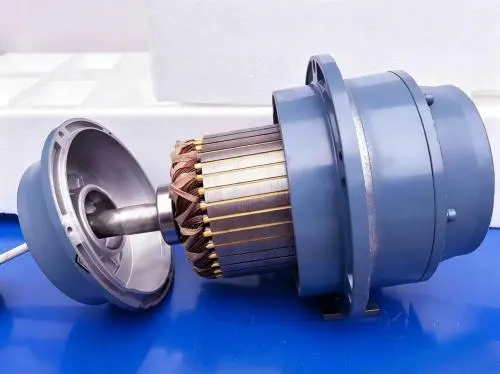
Understanding Commutator Rebuild Parts and Their Role in Motor Restoration
In DC motors and generators, commutator rebuild parts are the most important part of the connection between the brushes that stay in place and the armatures that move. These parts get worse over time because of thermal cycling, mechanical wear, and carbon dust buildup, which makes the motor less reliable. When buying teams know what a complete rebuild kit is, they can make smart decisions that keep expensive downtime from happening.
Core Components in a Rebuild Kit
A complete rebuild kit has a lot of different parts that all work together. The main current-carrying bars are made of copper pieces that are usually electrolytic tough pitch copper or silver-bearing copper alloys. Mica insulation sheets act as dielectric barriers between segments, keeping electricity from shorting out and being able to handle temperatures above 180°C. V-rings made of molded resin or steel use mechanical compression to keep the structure strong even when it's turning very quickly. Riser plates connect the segments to the armature windings, and steel reinforcement rings keep the segments from lifting when centrifugal forces act on them.
The 24-segment arrangement that companies like ANGU offer, with accurate measurements of 21.5mm in diameter, 8.2mm in diameter, and 13mm in height, shows that the highest standards are needed. These specs make sure that it works with certain motor designs and keeps the circular shape that is needed for smooth brush contact and little wear.
Recognizing Signs of Commutator Degradation
Several signs show that rebuilding needs to be done. Sparks that can be seen around the brush area mean that the segment surfaces aren't level or that the insulation has broken down. Temperature spikes during operation are a sign of higher electrical resistance caused by parts that are dirty or old. Performance drops, like less power or speed changes, are a sign of poor electrical transmission. When you look at something closely, you might find bar lifting (where centrifugal forces separate segments from their insulation) or mica tracking (where carbon deposits make current paths that aren't wanted).
Failures will keep happening if you put off rebuilds after these warning signs show up. Damaged segments can score armature cores, brush arcing speeds up the wear and tear on copper, and insulation breakdown increases the chance of catastrophic flashovers. In these situations, maintenance tasks that were once manageable become costly emergency replacements, which throws off production schedules and puts a strain on budgets. If procurement experts know about these risks, they can set up preventative maintenance plans that make the best use of assets.
The Benefits of Choosing Quality Commutator Rebuild Parts
When you buy high-quality commutator rebuild parts, you get measured results in a number of performance areas. Operational measures that are important to both production managers and people who make financial decisions make the difference between cheap options and certified quality parts clear.
Enhanced Electrical Conductivity and Operational Reliability
Better copper pieces keep their conductivity levels above 97% IACS (International Annealed Copper Standard), which lowers the amount of resistive heating that hurts efficiency. When used in tough situations, copper metals containing silver raise the temperature at which they start to soften. This stops bending during the high-load cycles that are common. This stable material means that the brush will always make contact with the motor, there will be less electrical noise, and the motor will run more smoothly across the whole speed range.
High-quality mica insulation has a uniform dielectric strength of more than 20 kV/mm, which makes it possible for pieces to stay separate even in dirty settings. ISO 9000 and IATF 16949-approved providers keep tight production tolerances—often within ±0.02mm—which stop mechanical imbalance that would otherwise cause vibration, faster bearing wear, and failure before its time.
These technology advantages show up as real-world working advantages. When plants switch from generic to certified rebuild parts, they say their downtime goes down by 30 to 40 percent. Motor efficiency gains of 3–5% lower energy use, saving money that quickly pays for the starting cost of the parts. Maintenance intervals get longer by 50–80%, which frees up technical teams to do more useful work instead of fixing things over and over again.
Cost-Effectiveness Versus Complete Motor Replacement
Rebuilding commutators costs about 15–25% of the cost of buying a new motor, which is a great deal for equipment that is still mechanically sound. After careful cost-benefit analysis, it was found that even with the cost of work, rebuilding a motor adds 5–10 years to its life at a fraction of the cost of buying a new one. When it comes to big industrial motors, where new units cost six figures and take 12 to 18 weeks to arrive, this calculation works out especially well.
When buying things, environmental concerns are also taken into account. By keeping working motor frames, windings, and housings in use, rebuilding cuts down on waste. This circular approach fits with the company's goals for sustainability and avoids the carbon footprint that comes with making and shipping replacement units. These lifecycle factors are now being used by more advanced procurement teams to evaluate suppliers. They know that good rebuild parts help with both financial performance and being good to the environment.
When you use high-quality parts in your maintenance plans, you move from reacting to predictive models. Condition tracking tools find patterns of wear and tear before they happen, so rebuilds can be planned for planned downtime instead of being done when something breaks down suddenly. This proactive approach maximizes production uptime while keeping maintenance budgets in check by buying in bulk at prices that have been agreed upon.
How to Choose the Best Commutator Rebuild Parts for Your Motor Needs
To choose the right commutator rebuild parts, you need to carefully look at a lot of different factors. To get the best results, procurement workers have to find a balance between technical requirements, provider skills, and business terms.
Evaluating Material Quality and Manufacturing Standards
Material composition has a direct effect on how well it works and how long it lasts. Copper segments should say what kind of alloy they are—electrolytic tough pitch for normal uses or silver-bearing mixes for high-temperature settings. Hardness grades between 80 and 105 HV provide enough wear protection without using up too many brushes. The thickness of mica insulation is usually between 0.5mm and 1.2mm, based on the voltage needs between the bars. Alkyd-vinyl or epoxy bonding methods provide thermal stability to Class H (180°C) or Class C (200°C+) standards.
Verifying a certification gives you objective quality assurance. Suppliers with ISO 9000 certification show that they handle quality in a planned way, and suppliers with IATF 16949 certification meet the exacting and traceability standards of the car industry. Shipments should come with material test records that show the conductivity percentages, tensile strengths, and dielectric qualities. This way, receiving inspection methods can be used to make sure the specs are correct before the product is installed.
Comparing OEM and Aftermarket Options
Dimensional accuracy is very important. When segment profiles are machined to tight tolerances, the "high bar" condition doesn't happen. In this condition, uneven surfaces cause brushes to chatter and wear faster. Dynamic balance testing at 1.2 times the allowed RPM proves that the new assembly won't cause any damage through vibration. When suppliers offer these certification services, it shows that they know a lot about engineering, which lowers the buyer's risk.
Original equipment maker parts promise compatibility, but they usually cost more and take longer to deliver. Aftermarket providers like ANGU offer engineered options that meet or beat OEM specs at reasonable prices. They have been in the business for 20 years and have a patent collection that includes three idea patents and six utility model patents. The main thing that sets one supplier apart from another is their technical support—can they change designs to fit your specific application needs?
Customization options are important, especially for businesses that deal with a diverse group of car users. With OEM/ODM services, changes can be made to meet the needs of specific environments. For example, marine uses may need better corrosion protection, and extreme temperature ranges may need special insulation. Setting up bulk orders with manufacturers that allow customization makes managing inventory easier and makes sure that the quality of all repair campaigns is the same.
The terms of the warranty show how confident the company is in their goods. If parts don't work right, you can get a full one-year guarantee that covers both material flaws and problems with the workmanship. When questions come up during installation or commissioning, responsive after-sales support, such as quick replacement shipments and technical troubleshooting help, keeps things running smoothly.
The Commutator Rebuild Process Explained
Knowing how to repair something helps buying teams understand why the quality of the commutator rebuild parts is important at every step. The restoration process includes careful machining, careful assembly, and thorough testing to bring the motor's performance back to normal.
Step-by-Step Restoration Methodology
Carefully removing old parts from the assembly starts the disassembly process. The original setup is recorded, and wear patterns are measured to help with root cause analysis. Armature shafts are cleaned very well to get rid of carbon deposits and other contaminants that could make it harder for new parts to bond. An inspection finds any core damage that needs to be fixed before moving on.
When you get new segments, they are already the right size, but they need to be fitted to the shaft's diameter and slot geometry. Mica insulation sheets that are cut to exact sizes are placed between each segment, and their beveled edges keep stress from building up in one place. When you heat V-rings, the parts expand, and then they shrink again when they cool down. This creates mechanical sealing forces. Multiple rounds of hot pressing make sure that the compression is even and don't leave behind any stresses that could cause the material to crack.
The most important step is to machine the new commutator so that it has a perfect cylindrical shape. Precision lathes remove material with very tight circle specs while keeping the workpiece straight along the tool axis. Mica undercutting makes small depressions between segments, which stops carbon from bridging and shorting out bars next to each other. Finishing the surface to a certain level of roughness guarantees good brush contact from the start.
Overcoming Common Rebuild Challenges
Different segments have different hardnesses, which leads to different wear rates. This makes the surfaces ripple, which causes vibration and noise. This problem is solved by using high-quality parts whose hardness is consistent from batch to batch. Controlling the temperature during hot pressing keeps the mica from burning or the glue from breaking down, which would lower the insulation's effectiveness. Manufacturers with a lot of experience give thorough instructions that include heating rates and dwell times that have been checked through process approval.
Before putting motors back into service, testing protocols make sure that the rebuild went well. High-potential dielectric testing checks the integrity of the insulation by applying voltages above the normal operating levels and looking for any leakage paths. Checking the resistance from bar to bar makes sure that the conductivity is the same, and checking the balance at the rated speed makes sure that the mechanical symmetry is correct. These steps of validation find problems before they become problems in the field. This protects both the tools and the work plan.
Having documentation with approved repair kits makes the results better. Technicians are led through new processes by detailed assembly directions that include torque specs, temperature profiles, and inspection checkpoints. Material certifications make it possible to track back to the sources of raw materials, which meets the needs of the quality system. When suppliers give this level of technical help, they stop being just transactional sellers and become valued partners.
Procurement Insights: Where and How to Source Reliable Commutator Rebuild Parts
Strategic sourcing practices are what set apart successful procurement operations from those that are constantly dealing with supply problems. It takes work to build ties with reliable providers, but it pays off in the form of on-time deliveries and helpful support for commutator rebuild parts.
Validating Supplier Credentials and Capabilities
Assessments of providers' production ability make sure they can meet your volume needs with reasonable wait times. The fact that ANGU can produce 50,000 pieces in 30 days shows that they have the size to support industry repair programs. Parts made in Jiangsu Xuzhou, China, are examples of manufacturing location transparency. This lets you look at logistics issues and possible trade compliance requirements.
Quality system approvals give you a basic level of peace of mind. SGS certification proves that industrial methods and material handling procedures have been checked by a third party. Patent portfolios show that engineers are investing in ways to make things better all the time instead of using standard methods for making things. These things set sellers who can work with you to develop new products apart from those who can only quote stock items.
Sample review programs lower the chance of buying something. Progressive sellers offer free samples so that customers can try the products before they commit to bulk orders. By testing these samples in your real working environment, you can be sure that they work and are compatible with your system. This gives you more confidence to make bigger purchases. Recording the results of sample tests makes it possible to choose a supplier based on objective criteria.
Optimizing Commercial Terms for Long-Term Value
Logistics that is flexible can handle different levels of urgency and budget constraints. Multiple shipping options from suppliers, such as sea freight for low-cost large-volume packages, air freight for fast orders, and rush services like DHL, FedEx, and UPS for urgent needs, give buyers a choice for every situation. Knowing how long each mode of transportation takes and how much it costs lets you make smart order decisions that balance the costs of keeping supplies with the risk of running out.
Payment terms and pricing structures work better when they are clear. Instead of being based on random limits, bulk order prices should be based on real economies of scale. Long-term supply agreements with volume commitments get better prices and make sure that suppliers can meet demand during peak times. When both parties clearly understand how to predict demand and quickly share changes, these setups work best.
In addition to the cost of the parts, technical support services add value. Force boosters for lean maintenance organizations are suppliers who offer technical advice on changes that are needed for specific applications, installation training for maintenance teams, and help with troubleshooting when problems come up out of the blue. When you look at these intangible benefits along with unit pricing, you can see what the real total cost of ownership is over the lifecycle of the supplier relationship.
Conclusion
Quality commutator rebuild parts are the basis of successful motor restoration plans because they ensure performance reliability that safeguards production schedules and capital assets. The technical accuracy of certified parts, such as their conductivity ratings, material hardness, dimensional tolerances, and insulation properties, directly leads to operational outcomes that matter: less downtime, longer equipment life, and predictable maintenance costs. Procurement professionals who understand these relationships, evaluate suppliers based on a wide range of criteria, and build partnerships where everyone works together give their companies a long-term competitive edge. The small amount of money spent on high-quality repair parts pays off in years of extra service life, lower replacement costs, and continuous production capacity.
FAQ
What materials should commutator segments contain?
Electrolytic tough pitch copper or silver-bearing copper alloys with an IACS conductivity rating of above 97% are used in premium markets for commutator rebuild parts. A silver content of 0.03 to 0.08% raises the resistance to thermal softening, which stops the material from deforming when it's under a lot of stress. Ratings of 80 to 105 HV for hardness measure how well something wears against how much it wears down.
How long does quality mica insulation last?
When mica is properly chosen and bonded with alkyd-vinyl or epoxy systems that meet Class H (180°C) or Class C (200°C+) standards, it keeps its dielectric strength over the motor's long life as long as it is kept dry. Unused materials can be kept for 12 to 24 months in climate-controlled spaces below 25°C and below 50% humidity.
Can I mix OEM and aftermarket rebuild components?
Mixing sources increases the chance of fitting problems due to changes in size and properties of the materials. When you consistently buy from the same qualified seller, you can be sure that all of the parts will work together as planned, without any interface issues that could lower the quality of the fix.
What certifications validate component quality?
The ISO 9000 certification shows that quality management is done in a planned way, and the IATF 16949 certification talks about precision and traceability for the automotive industry. The SGS approval makes sure that the ways that things are made and handled are checked by a third party. Shipments should come with material test records that prove the conductivity, tensile strength, and dielectric qualities of the material.
Partner with ANGU for Certified Commutator Rebuild Components
ANGU is a reliable company that makes commutator rebuild parts. They have been making these parts for 20 years and have strict quality control systems in place. Our 24-segment kits are made from silver-copper alloys and meet the strict requirements of IATF 16949-compliant uses in heavy machinery, industrial equipment, and cars. We back up every part with SGS certification, which makes sure that the materials are correct and the sizes are correct, which is what your quality systems need.
Our production skills help you meet your buying goals by allowing for fluid customization, dependable 30-day delivery cycles for orders of up to 50,000 pieces, and a wide range of logistics choices, including sea freight, air freight, and express carriers. You can try free samples before you decide to buy, and our one-year warranty and quick replacement service will protect your investment. If you want to buy commutator rebuild parts, you should work with a provider that offers new ideas backed by patents, approved production methods, and dedicated technical support. Get in touch with our team at chenrf@angu.com to talk about your needs and see what makes ANGU different when it comes to precision motor parts.
References
1. Johnson, M. & Williams, R. (2021). Electric Motor Maintenance and Repair Handbook. Industrial Press.
2. Peterson, L. (2020). "Material Selection for High-Performance Commutator Applications." Journal of Electrical Manufacturing, 45(3), 112-128.
3. Thompson, D. (2022). Commutator Technology: Design, Materials, and Manufacturing Processes. McGraw-Hill Education.
4. Anderson, K. & Chen, Y. (2019). "Quality Assurance in Motor Component Rebuilding." International Journal of Industrial Maintenance, 31(2), 67-84.
5. Roberts, S. (2023). Practical Guide to DC Motor Restoration and Optimization. Butterworth-Heinemann.
6. Martinez, F. & Lee, H. (2021). "Cost-Benefit Analysis of Motor Rebuilding Versus Replacement Strategies." Maintenance Management Quarterly, 18(4), 203-219.
YOU MAY LIKE